
Overview #
The Uncanny Automator integration for WP Cafe sends your restaurant data to Uncanny Automator through an incoming webhook. Every new reservation, WooCommerce order, and onboarding save is posted to a webhook URL you create in Automator, so you can build no-code recipes that add contacts, send emails, or trigger any of its connected apps.
Restaurant owners often want a reservation or order to kick off other actions, like tagging a customer or notifying staff. This integration hands that data to Automator so you decide what happens next, without writing code.
Requirements #
- WooCommerce: required by WP Cafe for orders and payments.
- WP Cafe: the reservation and food-ordering plugin that sends the data.
- Uncanny Automator: install and activate it. The incoming webhook trigger works in the free version, so Automator Pro is not required for this setup.
- An incoming webhook URL from an Automator recipe (created in Step 1).
Step 1: Create an incoming webhook in Uncanny Automator #
First build a recipe in Automator that listens for the data WP Cafe will send.
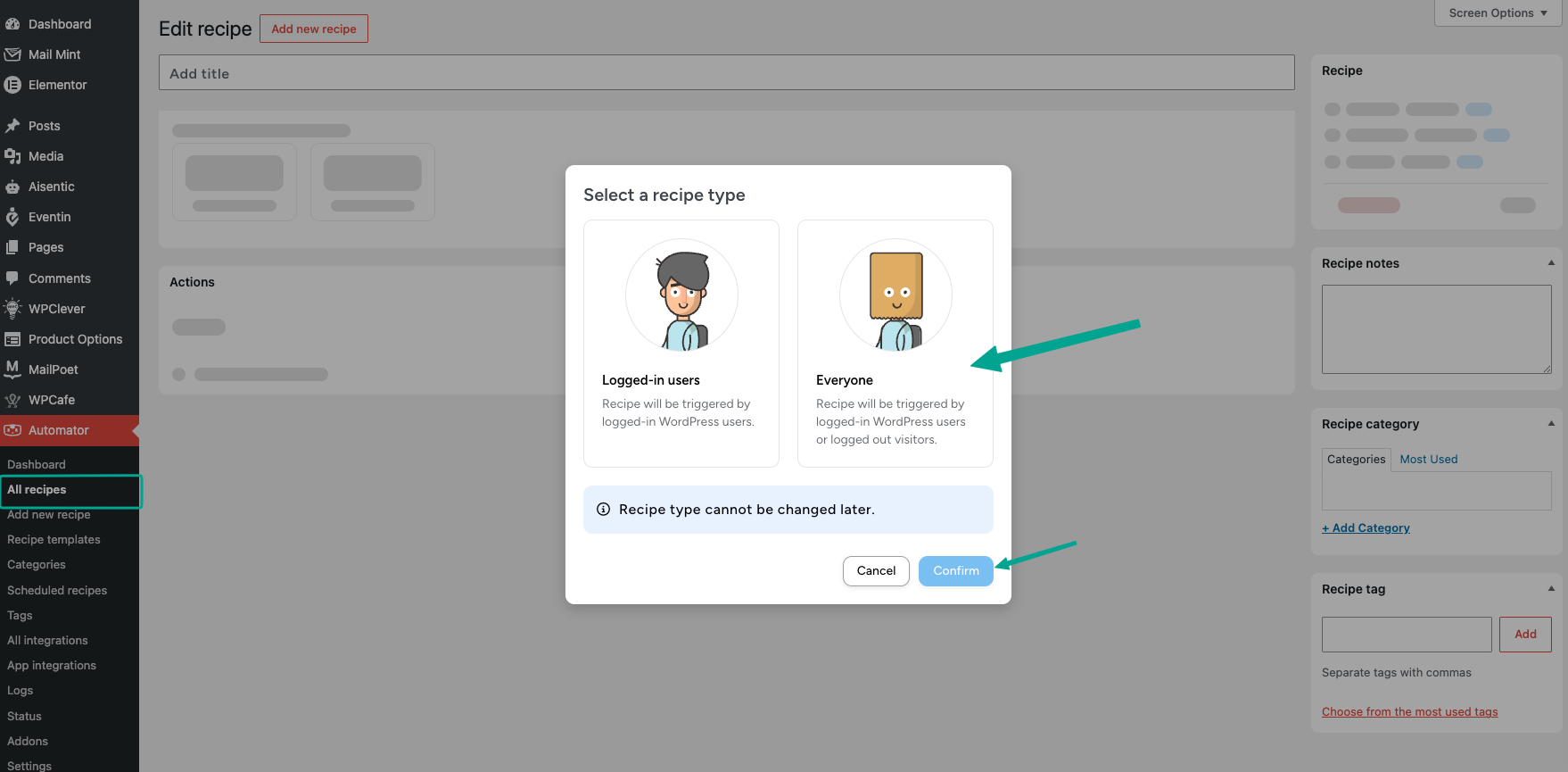
- Go to Automator > Add new recipe and choose the Everyone recipe type. A webhook is an anonymous request, so it cannot use the “Logged-in users” type.
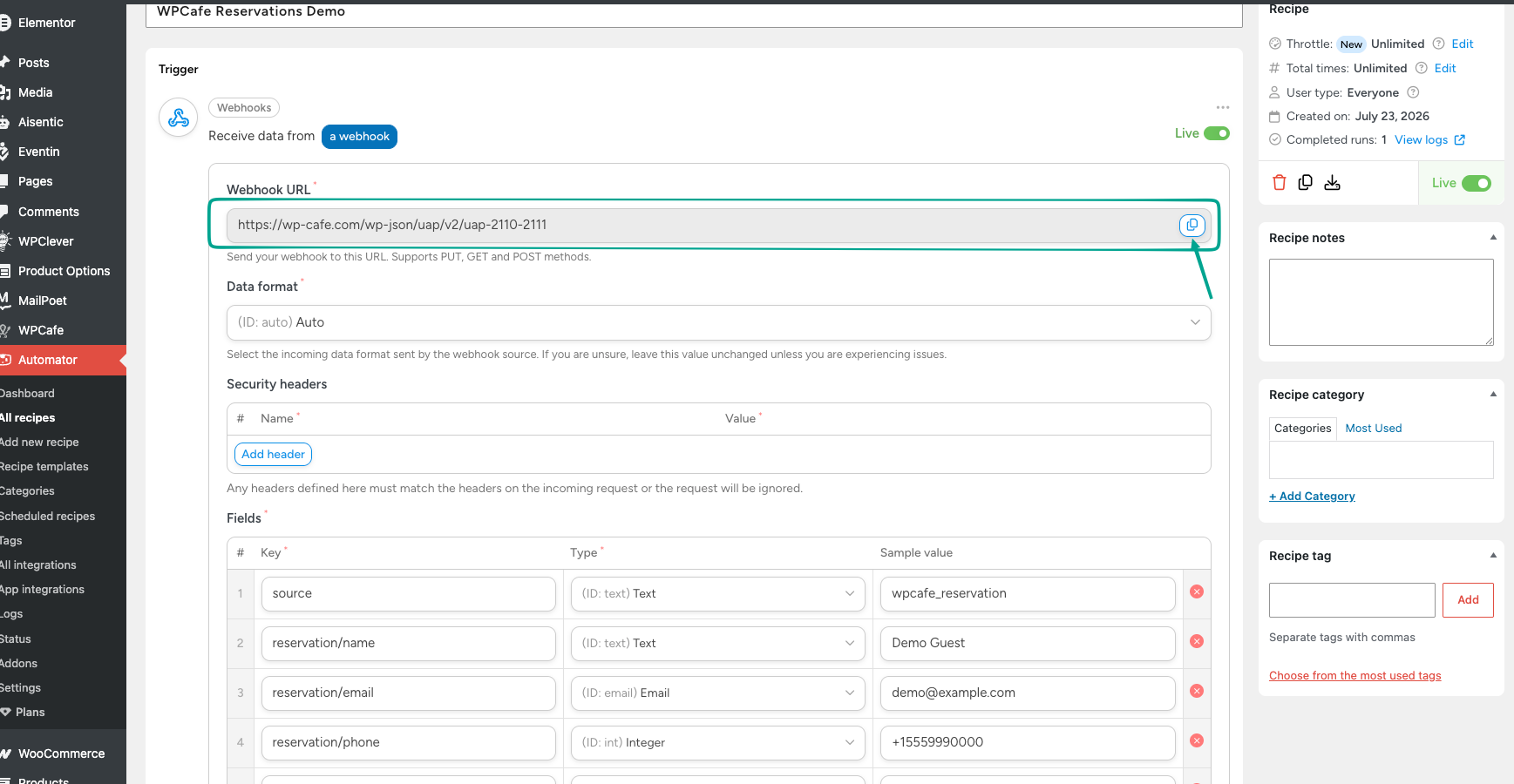
- Under Triggers, select Webhooks, then Receive data from a webhook.
- Automator shows a unique webhook URL. Copy it. You will paste it into WP Cafe in Step 2.
- Keep the recipe in Draft for now. Sample capture only works while the recipe is a draft.
Step 2: Enable and configure the card in WP Cafe #
Now connect that URL to WP Cafe so your data starts flowing.
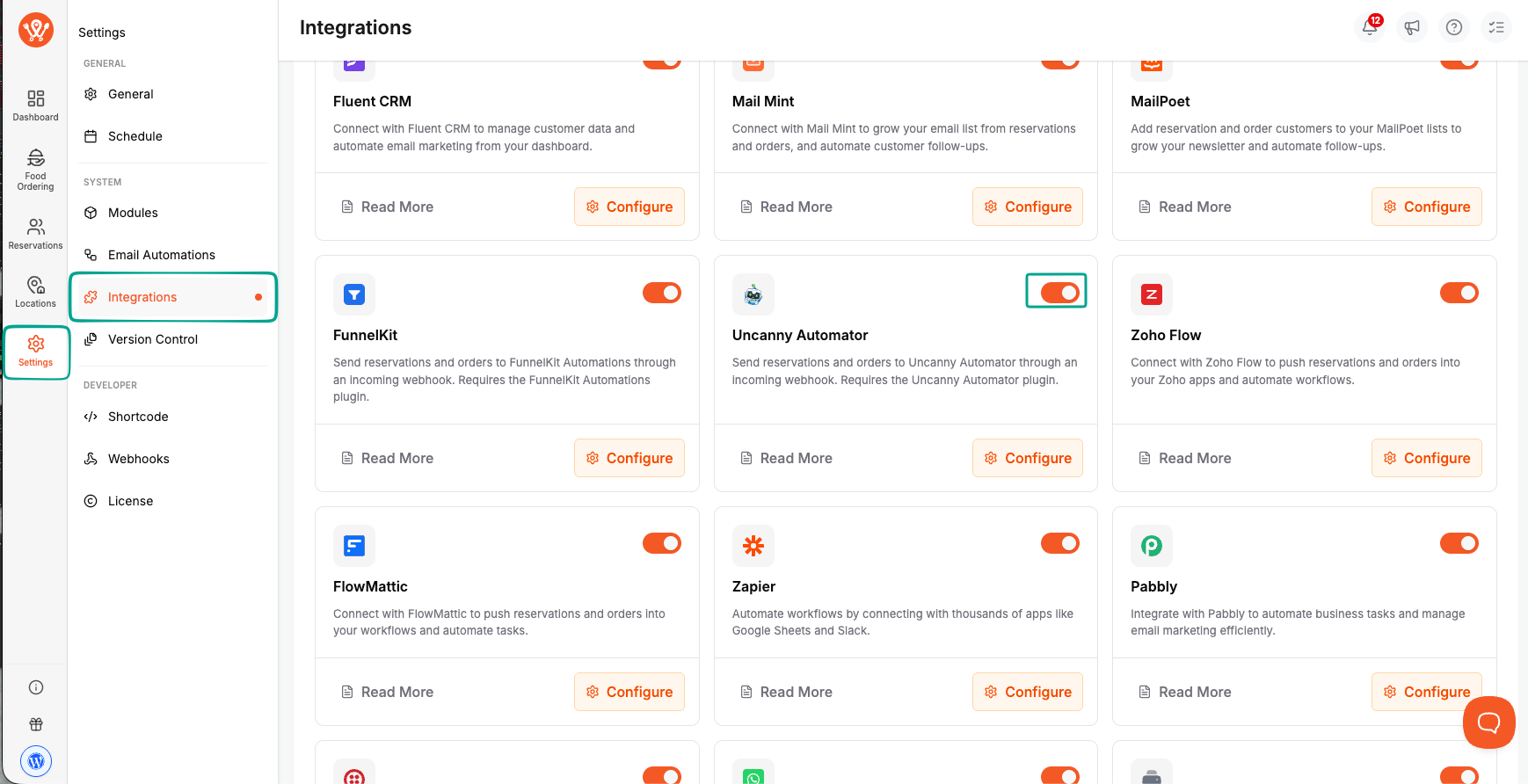
- Go to WP Cafe > Integrations.
- Find the Uncanny Automator card and turn its toggle on.
- Click Configure on the card to open its settings.
- Paste the webhook URL into the Webhook URL field, then click Save.
| Note: The Uncanny Automator plugin must be installed and active for recipes to receive this data. If the card is on but Automator is not active, nothing is processed on the receiving end. |
Step 3: Capture fields and go live #
Send one test event so Automator learns the field names, then finish the recipe.
- In the Automator trigger, click Get samples. It listens for about 60 seconds.
- In WP Cafe, trigger a test event. Create a reservation or place a WooCommerce order.
- Automator shows the received data. Click Use these fields to add the keys to your trigger. Nested keys use a forward slash, for example
reservation/email. - Add your actions (add a contact, send an email, tag a user, and so on), then set the recipe Live.
Each event carries a source field so one recipe can tell them apart: wpcafe_reservation, wpcafe_woocommerce_order, or wpcafe_restaurant_onboarding. Along with it comes a reservation, order, or restaurant object holding the details.
Frequently Asked Questions (FAQ) #
| Q1: Do I need Uncanny Automator Pro for this? No. The “Receive data from a webhook” trigger is part of the free Uncanny Automator plugin, so incoming webhooks work without Pro. You only need Pro if a specific action in your recipe (like some premium app integrations) requires it. |
| Q2: My recipe is not receiving any data. What is wrong? Check three things. The WP Cafe Uncanny Automator card must be toggled on with the correct webhook URL saved. The Automator recipe must be Live (or in Draft while using Get samples). And you must trigger a real event, like a new reservation or order, for data to send. |
| Q3: Can one recipe handle reservations and orders separately? Yes. Every event includes a source field set to wpcafe_reservation, wpcafe_woocommerce_order, or wpcafe_restaurant_onboarding. Add a filter or condition on that field in Automator, or build one recipe per source, so each event runs the right actions. |
Conclusion #
The Uncanny Automator integration for WP Cafe turns each reservation and order into a trigger for your own automations, with no code and no Pro upgrade for the webhook itself. Create the incoming webhook, paste its URL into the card, capture the fields, and build the actions you want.
For a similar webhook setup, see the FunnelKit Automations integration guide.


