23 Event Promotion Ideas to Increase Attendance


Table of Contents
Promoting an event successfully takes more than publishing one social media post and hoping people register. People often need several reminders before they decide to attend. They may discover your event through search, social media, email, or a partner, then look for more information before taking action. A consistent promotion plan helps you reach the right audience, explain your event’s value, and stay visible until registration.
In this guide, you’ll find 23 practical event promotion ideas for social media, email, partnerships, media outreach, incentives, retargeting, and pre-event campaigns. These tactics can help you increase visibility, attract more potential attendees, drive registrations, and improve event attendance. For the complete funnel process, read our event marketing funnel guide.
Quick Overview
This guide shows you how to build a complete event promotion strategy that actually brings attendees, using a step-by-step framework and proven tactics, and how Eventin helps you manage registrations, tickets, and promotion directly from your WordPress site.
- Why is event promotion important?
- 23 effective event promotion strategies to drive attendance
- Proven strategies to increase event visibility and reach
- WReal-world examples of effective event promotion
- Common mistakes to avoid in event promotion
- How Eventin supports event promotion with pages, registration, and ticket selling

Why is event promotion important?
Whether you’re organizing a product launch, conference, workshop, or concert, the goal is the same: to grab interest, drive attendance, and achieve outcomes like ticket sales, getting sponsorships, or brand exposure.
But no matter how flawlessly your event is planned, if no one knows about it, it doesn’t matter. The success of your event hinges on visibility. This is where strategic promotion becomes mission-critical: it gets your event in front of the right audience, at the right time, with the right message that inspires action.
According to Eventbrite, nearly 78% of event creators say email marketing is their most effective promotion channel.
Yet, many small businesses fail to adopt a full multi-channel strategy, often leading to lower attendance than expected. Hootsuite’s 2025 Social Media Trends Report also highlights that 62% of event organizers attribute higher attendance directly to social media campaigns.
These stats make one thing clear: strong promotion isn’t optional — it’s essential.
Why it really matters:
- Maximizes visibility & attendance: A good promotion strategy puts your event in front of the people most likely to attend.
- Boosts ROI: The more people you attract, the greater your chances of hitting sales, lead generation, or brand awareness goals.
- Drives engagement: Early buzz, social shares, and influencer support create anticipation before your event even begins.
- Strengthens credibility: Consistent and professional promotion signals trust and quality, making people more likely to register.
23 effective event promotion strategies to drive attendance
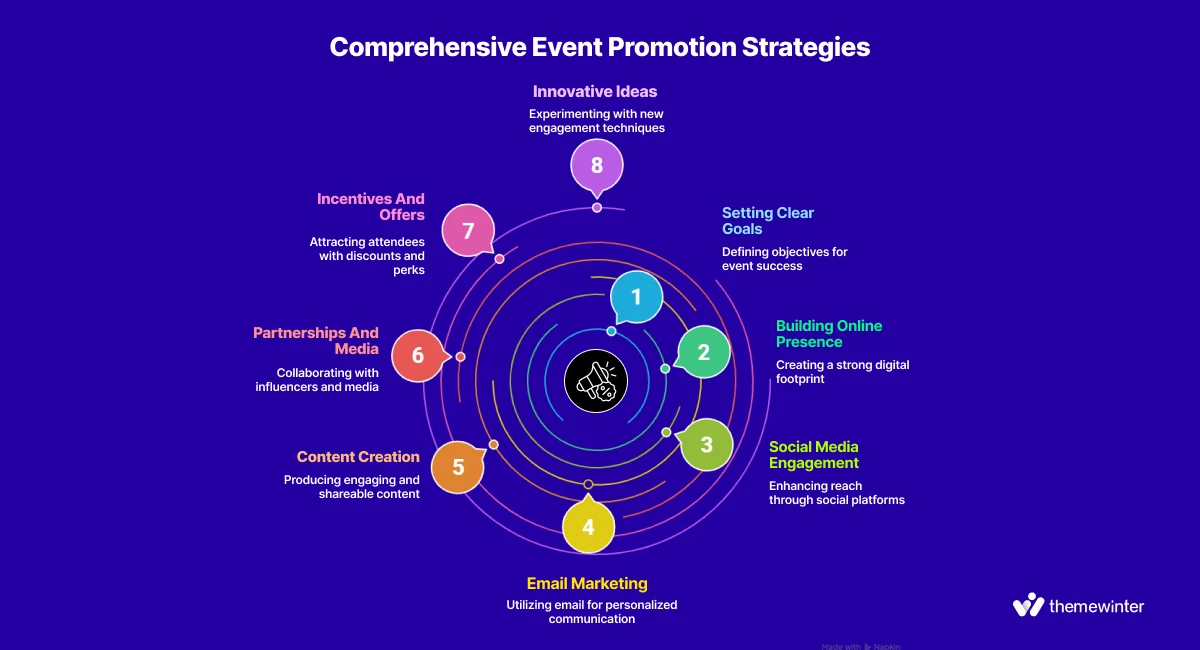
Events are costly, but a well-planned event promotion strategy can increase your ROI by filling seats and creating buzz. Here we outline 23 best event promotion strategies to increase attendance, drawing from event promotion ideas by using digital tools, partnerships, and creativity.
Set the first step for success
Every successful event promotion campaign starts with a strong foundation, and that means setting the right goals and knowing exactly who you’re trying to reach. Without a clear direction, even the most creative marketing strategies can fall flat.
This initial step isn’t just about big-picture thinking—it’s about narrowing your focus with strategic precision. From outlining concrete event goals to understanding your audience deeply and segmenting them smartly, this phase shapes your roadmap for meaningful attendee engagement and measurable results.
1. Define clear event goals
Before diving into promotion, ask yourself: What does success look like for this event? Clear goals act as a compass, directing every decision—messaging, budget allocation, and even the tools you use. Vague ambitions like “increase awareness” aren’t enough. Instead, break your objectives into tangible targets using the SMART goal-setting framework.
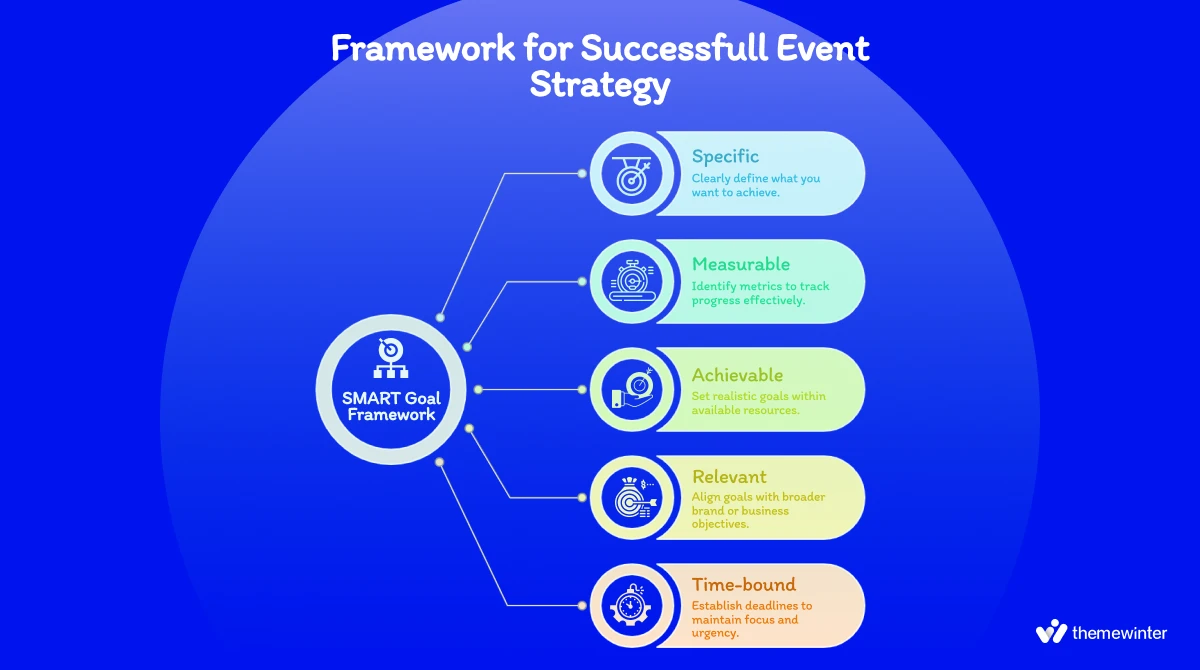
- Specific – Be clear on exactly what you want to achieve (e.g., 500 ticket sales).
- Measurable – Identify metrics to track progress (e.g., number of leads).
- Achievable – Set realistic goals within your available resources.
- Relevant – Align your goals with broader brand or business goals.
- Time-bound – Establish a deadline to maintain focus and urgency.
For example, imagine you’re organizing a tech conference. Instead of vaguely aiming to “attract attendees,” you could set a goal like: Attract 200 IT managers within 30 days. This concrete target guides everything—from your ad messaging and landing page copy to your performance KPIs.
When goals are clearly defined, you can track metrics like registrations, conversions, or ticket revenue to measure your progress.
2. Understand your target audience
Effective promotion starts with deep audience insight. Understanding who you’re talking to helps ensure your message resonates and motivates them to act. Skipping this step can lead to bland campaigns that miss the mark. Start by conducting research using tools like:
- Google Analytics – Understand website visitor behavior and demographics.
- Social media insights – Discover age ranges, interests, and active times.
- Surveys and polls – Gather direct input on preferences and expectations.
Once you’ve collected this data, translate it into detailed attendee personas. These fictional profiles act as blueprints for your ideal participants and help tailor your promotional approach accordingly:
- Name, age, job title – Add identity to the persona.
- Motivations for attending – Know what outcomes they’re seeking, e.g., networking, learning, fun.
- Pain points or challenges – Understand what frustrations your event can resolve.
3. Segment audiences for clear messaging
Once you know your audience, go a step further—segment them into specific groups to deliver more relevant messaging. A one-size-fits-all campaign can get lost in the noise, while segmentation helps you personalize outreach for better results.
Break down your audience using criteria like:
- Location – Local vs. international attendees
- Behavior – Past attendance, website visits, content downloads
- Interests or industry – Tailor offers based on professional focus or hobbies
Build a buzz-worthy online presence
Your online presence is the digital front door to your event, and it needs to impress. A strong presence not only builds credibility but also serves as a magnet for potential attendees. When people search, browse, or hear about your event, the first thing they’ll do is visit your website. Make sure what they see convinces them to stick around and sign up.
4. Create a stunning event website
Think of your event website as the central hub for all promotional efforts. It should reflect your brand and provide visitors with all the essential information at a glance. Keep the design clean, engaging, and mobile-friendly to ensure accessibility across devices. Key website elements include:
- Event name, date, and location: Clearly visible on the homepage.
- Registration link: Prominently placed and easy to use.
- Speaker or performer Details: Highlight keynote guests with bios and photos.
- Catchy tagline and visuals: Reinforce your event’s theme and energy.
- Mobile responsiveness: The Design must work smoothly across devices.
Moreover, a poorly designed or slow-loading site may drive visitors away. Google reports that over 53% of users abandon sites that take more than 3 seconds to load. So you need to keep these things in mind when you create a website for your events.
5. Optimize landing pages with SEO and CTAs
A beautiful website won’t matter if no one can find it. This is where search engine optimization (SEO) comes in. Make your event discoverable by incorporating relevant keywords throughout your landing pages. Think like your audience: what would they type into Google?
Use these SEO best practices:
- Incorporate keywords
- Optimize titles and meta descriptions
- Create compelling CTAs
6. Ensure a smooth user experience
Once users land on your site, they should be able to navigate it with ease. A smooth user experience (UX) reduces friction and boosts sign-ups. Focus on performance, clarity, and accessibility. Prioritize the following UX features:
- Fast load times: Use tools like Google PageSpeed Insights to improve performance.
- Clear navigation: Make it easy to find the schedule, speakers, and ticket info.
- Mobile responsiveness: Over half of users browse on mobile; your design must adapt.
- Accessibility: Include alt text for images, legible fonts, and high-contrast designs.
7. List your event on popular platforms
Beyond your own site, tap into platforms where people already search for events. Event directories and local calendars have built-in audiences actively looking for things to attend. Listing your event here increases organic visibility and drives additional traffic.
Top platforms to consider:
- Eventbrite or similar alternatives
- Facebook Events
- Local news or city event calendars
Include important details like event type, date, time, location, cost, and registration link. Regularly update these listings with new info, offers, or speaker announcements.
🤖 Create Event Promotion Content Faster with Eventin AI
Writing event titles, descriptions, FAQs, and promotional copy takes time. With Eventin AI, you can generate event content faster and turn your ideas into ready-to-publish copy right inside WordPress.
Use it to draft event details quickly, then refine the message with your speaker info, event value, and CTA to boost registrations.
Use social media to enhance your reach
Social media is one of the most powerful tools in your event promotion strategy. It gives you direct access to potential attendees and allows you to build excitement in real-time. But to truly make an impact, you’ll need a thoughtful strategy tailored to your audience and platforms.
8. Promote across social media channels
Different platforms attract different audiences, so choose the right ones based on who you’re targeting. Visual platforms like Instagram and TikTok are ideal for lifestyle, entertainment, or food events. In contrast, LinkedIn works better for B2B and professional conferences. Here’s how to get started:
- Identify where your audience is most active
- Post regularly without overwhelming your audience
- Use storytelling—share the “why” behind your event
- Incorporate user-generated content
9. Run targeted social media ads
While organic content builds community, targeted ads give your event instant visibility, especially among new audiences. Platforms like Facebook, Instagram, and LinkedIn allow you to precisely define your audience using filters such as age, location, interests, and job roles.
Key steps to run effective ads:
- Define your target audience
- Use compelling visuals and CTAs
- Set a manageable budget
- Monitor key metrics
10. Spark engagement with countdowns and teasers
Build anticipation with countdowns, teaser content, and sneak peeks. These posts tap into FOMO (fear of missing out) and keep your event top-of-mind as the date approaches. Design eye-catching visuals using tools like Canva and include short, punchy captions.
Effective teaser tactics include:
- Countdown posts
- The speaker or performer reveals
- Sneak-peek videos
For instance, a business conference might post Only 5 days until our keynote reveal—can you guess who it is? along with a blurred photo. Hootsuite reports 60% higher engagement for video content, so leverage short-form video whenever possible. Stale or overly polished posts tend to get ignored—keep content fun, fast, and authentic.
11. Encourage attendees to share content
Your attendees can be your best promoters—if you give them the right tools. Create shareable assets like branded hashtags, event-themed Instagram filters, or pre-written tweet templates. The goal is to make sharing easy, fun, and rewarding. Ideas to encourage sharing:
- Branded hashtag
- Social media kits
- Contests and incentives
For example, a festival could encourage attendees to share their outfit photos using #GlowFest25 in exchange for a chance to win VIP upgrades. This kind of organic reach can outperform ads because it’s driven by trust and enthusiasm.
Use email marketing
Unlike social media, email offers a direct line to your audience’s inbox, making it perfect for personalized messaging, exclusive offers, and event updates. Done right, it nurtures interest and drives strong conversions.
12. Send personalized event invitations
Personalization is the backbone of effective email outreach. Gone are the days of generic “Hello attendee” blasts. Today’s audiences expect relevance and a personal touch. Use platforms like Mailchimp or ConvertKit to insert names, location details, or past attendance history in your emails.
Effective personalization strategies:
- Use the recipient’s first name in the subject or greeting.
- Mention previous engagement – e.g., “Hi Sarah, thanks for attending last year’s summit!”
- Segment your audience – send VIP invites to returning guests or industry leaders.
- Tailor messaging based on interests – e.g., tech professionals vs. marketers.
According to Eventbrite’s report, 68% of attendees discover events through email, underscoring its importance. Avoid sending the same template to everyone—generic emails often get ignored or marked as spam.
13. Launch email campaigns with reminders
Email marketing works best when structured as a campaign, not a one-time send. Use a drip strategy to build anticipation and maintain awareness over time. Whether it’s a one-day workshop or a month-long webinar series, a clear communication timeline helps reduce drop-off and boost registrations.
A typical campaign structure might include:
- Save the date sent 6–8 weeks out.
- Early bird discounts – highlight limited-time deals.
- Event highlights – spotlight speakers, activities, or sponsors.
- Last-chance reminders – create urgency close to the event date.
For instance, a webinar series might send weekly emails with speaker quotes, agenda teasers, and “Add to Calendar” buttons. Just be careful, don’t overload inboxes. Sending too frequently can irritate your audience. Monitor your unsubscribe rate to adjust the timing if needed.
14. Use data to refine email strategies
Your email platform offers valuable insights—use them. Monitor key metrics like open rates, click-through rates (CTR), bounce rates, and conversions to assess what’s working and what isn’t. With this data, you can refine your strategy over time for maximum effectiveness.
How to leverage data:
- A/B test subject lines – try variations like “Last chance to register!” vs “Your VIP access awaits.”
- Track link clicks – see which sections of your email (CTA button, speaker bio, etc.) draw the most interest.
- Identify best send times – test morning vs. evening, weekdays vs. weekends.
- Refine audience segments based on past performance and engagement.
📩 Automate Your Event Emails with Eventin
Stop sending emails manually for every registration. With Eventin’s Email Automation Builder, you can create automated workflows for confirmations, reminders, and follow-ups — all from one dashboard.
Set triggers, customize messages, and send the right email at the right time to keep your attendees engaged and reduce no-shows. :contentReference[oaicite:0]{index=0}
Leverage partnerships and media
Beyond your own channels, collaborations and media coverage can give your event the extra reach it needs. Partnering with the right influencers or getting featured in local press can tap into trusted audiences you might not reach otherwise.
15. Team up with influencers and brands
Influencer partnerships offer a direct way to reach niche communities. Whether it’s a micro-influencer with a local following or a brand ambassador with a national reach, influencers can amplify your message authentically. Effective influencer strategies:
- Offer free event tickets or exclusive perks in exchange for promotion. Use event ticketing plugins like Eventin.
- Ask influencers to share behind-the-scenes content or countdowns.
- Ensure the partner’s audience aligns with your event theme.
Authenticity is key, so choose wisely and set clear terms for content and delivery.
16. Pitch to local media and news outlets
Traditional media still holds power, especially for local or regional events. Create a press kit and send customized pitches to relevant outlets like newspapers, radio shows, or community blogs. Your pitch should include:
- A compelling story angle
- Event details, dates, location, and spokesperson info.
- High-quality photos and logos for quick publication.
17. Expand reach with cross-promotions
Team up with complementary businesses to tap into their existing customer base. These win-win promotions can include social media shoutouts, flyer exchanges, or bundled ticket deals. Cross-promotion ideas:
- Partner with local cafes or gyms to display flyers.
- Share each other’s social media posts or newsletters.
- Offer discounts to each other’s customers.
For example, a food festival might collaborate with nearby restaurants to distribute discount codes and co-branded content. These partnerships are cost-effective and authentic, but be sure to define responsibilities and branding guidelines to avoid confusion.
Drive action with incentives
Even the most exciting event needs a little push to convert interest into action. Incentives like discounts, giveaways, and retargeting ads create urgency and drive higher attendance.
18. Offer early bird discounts and perks
Encourage early registration by offering multi-tiered pricing, limited-time pricing, or VIP perks. This creates urgency and makes attendees feel rewarded for acting fast. Here are some examples:
- 20% off tickets before a certain date.
- Free merch or upgrades for early signups.
- Group discounts to drive bulk registrations.
19. Host contests and giveaways
Contests are a fun, low-cost way to generate buzz and engagement. Encourage users to tag friends, share content, or use your event hashtag for a chance to win, such as:
- Tag 2 friends for a chance to win free tickets!
- Share your favorite [event theme] memory with #EventVibes2025
- Give away backstage passes, merchandise, or premium access.
20. Use retargeting ads to re-engage visitors
Not everyone registers the first time they visit your site. Use retargeting ads to bring them back with a timely reminder or exclusive offer. How it works:
- Install Facebook Pixel or Google Ad Tracking on your event page.
- Create ad campaigns that target users who visited but didn’t register.
- Show dynamic content like “Still thinking about [Event Name]? Here’s 10% off!”
This approach helps convert hesitant users who may have forgotten or needed a final nudge. It’s an efficient use of your ad budget, as you’re targeting warm leads rather than starting from scratch.
Apply innovative ideas
In a saturated event landscape, standing out requires more than just traditional promotion. Innovative strategies like interactive content, immersive technology, and pre-event campaigns can spark excitement, foster engagement, and give your event a unique edge. These creative tactics go beyond clicks—they build anticipation and community.
21. Launch interactive quizzes or Polls
Audiences love to participate, not just observe. Interactive quizzes and polls are fun, low-effort ways to engage potential attendees while gathering insights on preferences and expectations. Platforms like Instagram Stories or Google Forms make it easy to create sleek, mobile-friendly experiences. Here are some smart quiz ideas:
- “Which session is right for you?” – Guide users to personalized agendas.
- “What’s your networking style?” – Match attendees with breakout groups.
- Polls on event themes – Let your audience vote on speaker topics, food menus, or music.
For example, a career fair could run a quiz titled “What’s your dream tech role?” and then suggest relevant panel sessions. These interactive elements not only increase engagement but also help tailor your offerings. Just ensure your content is fun, visually appealing, and on-brand—dull or irrelevant quizzes can harm your credibility.
22. Experiment with AR/VR teasers
Cutting-edge technologies like augmented reality (AR) and virtual reality (VR) are becoming more accessible and expected, especially for tech-forward audiences. Using AR/VR for event teasers provides an immersive preview of what’s to come, offering a memorable experience long before the event starts.
Ideas for AR/VR integration:
- Create a virtual event floor walk-through for expos or conferences.
- Launch an AR selfie filter tied to your event’s theme using Snapchat Lens Studio or Spark AR Studio.
- Use VR headsets at pop-ups or pre-events to simulate the event experience.
For instance, a gaming expo might launch a VR mini-tour of its exhibit hall or allow users to try a featured game demo via mobile. These wow-factor experiences not only grab attention but also signal that your event is innovative and worth attending.
Just remember to ensure device compatibility and provide alternative content for users without AR/VR capabilities.
23. Run pre-event engagement campaigns
Engagement shouldn’t begin on event day—it should start weeks (or even months) in advance. Pre-event campaigns warm up your audience, build community, and create buzz that snowballs into registrations and attendance. From webinars to social media challenges, there are many ways to make your audience feel like part of the event journey.
Examples of effective pre-event campaigns:
- Live Q&A sessions with keynote speakers via LinkedIn Live or YouTube.
- Mini-webinars or preview panels discussing upcoming topics.
- Social media challenges, e.g., “Share your favorite event moment for a free ticket!”.
How Eventin supports event promotion with pages, registration, and ticket selling
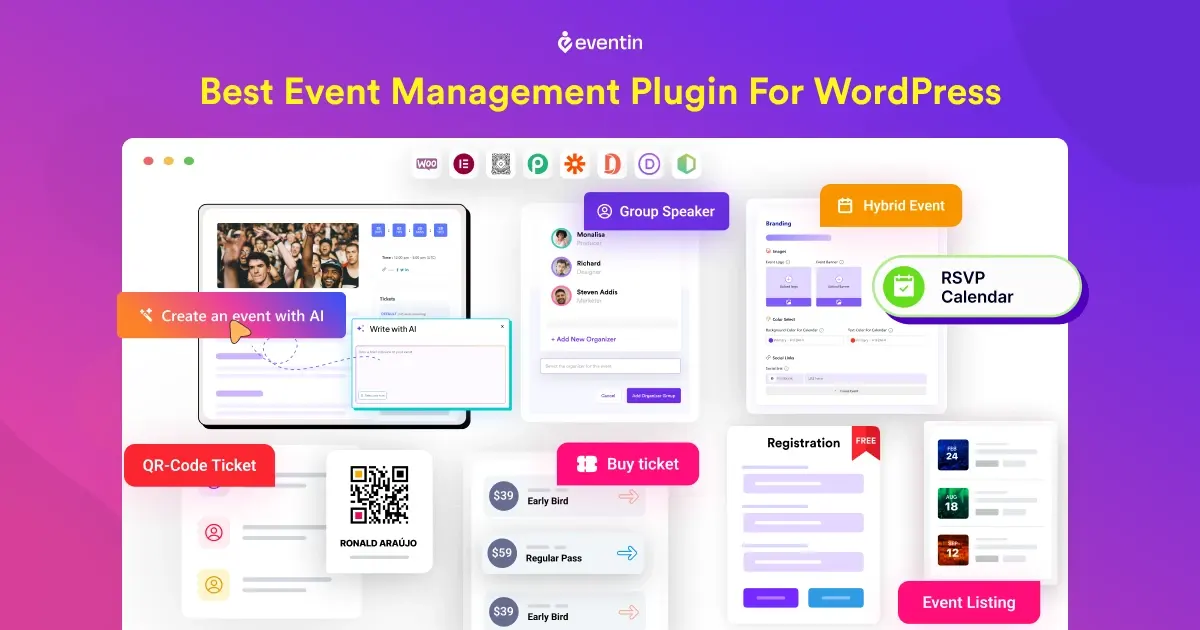
Promoting your event becomes much easier when you have the right event management system in place. Instead of using multiple tools for pages, registrations, and payments, you can manage everything from one place.
This is where an event management plugin like Eventin helps.
With Eventin, you can create a complete event setup directly inside WordPress. You can build a dedicated event page with all the important details, including date, time, location, speakers, and schedule. This gives visitors a clear place to learn about your event and take action.
Here’s how Eventin supports your event promotion from start to finish:
- Create high-converting event pages: Build a structured event page with all key details so visitors can quickly understand and register without confusion.
- Manage registrations without extra tools: Collect attendee information directly from your website, whether it’s a free or paid event.
- Sell tickets with full control: Set up multiple ticket types, pricing tiers, and availability based on your event needs.
- Accept payments easily: Use WooCommerce integration to accept payments through Stripe, PayPal, and other gateways.
- Automate confirmations and communication: Send instant confirmation emails and updates to keep attendees informed.
- Track attendees and manage data: View registrations, monitor ticket sales, and manage attendee details from a single dashboard.
Real Example of Successful Event Promotion with Eventin
Suzuki Matsuri used Eventin to manage registrations for a large free event. They handled over 3,700 participants in a single edition, including 13 riding groups, showing how Eventin can manage high-volume registrations efficiently—even without paid tickets.
Ready to Turn Your Event Promotion Into Real Registrations?
Instead of using multiple tools, you can create event pages, collect registrations, and sell tickets from one place. Eventin helps you manage everything directly from your WordPress site so you can focus on promoting your event and getting more attendees.
Common mistakes to avoid in event promotion
Even with a well-planned strategy, small oversights can divert your event’s success. Avoiding these common hitches can help you increase attendance and get the most from your promotional efforts.
- Starting promotion too late: Many organizers wait until the last minute, but successful events typically begin promotion 2–3 months in advance to build momentum and engagement.
- Lacking a clear value proposition: If potential attendees don’t understand what they’ll gain, they’re unlikely to register. Focus on communicating clear benefits.
- Focusing on features instead of benefits: Simply listing speakers or sessions isn’t enough—highlight what attendees will learn or achieve.
- Neglecting mobile optimization: With a majority of users browsing on mobile, a non-responsive site can cost you registrations.
- Over-relying on organic social media: While essential, organic reach is limited. Without allocating a budget for paid ads, you may miss high-intent users.
- Lack of follow-up communication: Sending one invite isn’t enough. Use reminders, updates, and behind-the-scenes content to stay top-of-mind.
- Ignoring post-event engagement: Failing to follow up with attendees after the event means missing a chance to build long-term loyalty and re-engagement.
FAQs
What is the best way to promote an event in 2026?
The best way to promote an event is to follow a structured strategy instead of using random tactics. Start with a high-converting event page, then use SEO, social media, email marketing, and short-form video to attract attention. Finally, use reminders and retargeting to convert visitors into attendees.
What are the most effective event marketing strategies?
SEO, email marketing, social media, influencer promotion, and retargeting work best. Short-form video and AI content also boost reach. Eventin helps you execute these strategies with built-in event management tools.
How can I promote an event with a low budget?
Use SEO, social media, email, and community promotion. Focus on organic reach instead of ads. Eventin helps you avoid platform fees and manage everything on your own site.
How do I measure the success of event promotion?
Track registrations, ticket sales, conversion rate, and engagement. These show what’s working. Eventin provides attendee and sales data to help you improve.
Conclusion
Promoting an event is not about trying random tactics and hoping something works. It’s about following a clear strategy that moves people from discovering your event to actually registering and showing up.
But strategy alone is not enough. You also need a system that helps you execute it without friction.
That’s where Eventin fits in. It allows you to create event pages, manage registrations, and sell tickets from one place, so your promotion efforts lead directly to real results.
If you want to grow your event attendance and avoid the usual complexity, start applying these strategies with a structured approach and use the right tools to support it.
Manage Your Event Promotion from One Place
Create event pages, collect registrations, and sell tickets directly from your WordPress site with Eventin.
Get Started with Eventin