Event Pricing Psychology: How to Price Event Tickets for More Sales


Table of Contents
Pricing your event tickets is not just about picking a number. It directly decides whether your event sells out or struggles to get registrations.
Set the price too high, and people hesitate. Set it too low, and you risk losing revenue or even reducing the perceived value of your event.
That is where event pricing psychology comes in.
It helps you understand how people think about price, what makes them feel an offer is worth it, and why small changes in pricing structure can increase ticket sales without extra promotion.
In this guide, we will break down how to price your event tickets using proven psychological strategies like early bird pricing, tiered tickets, scarcity, and value-based pricing.
Let’s dig in.
Ready to run smoother events?
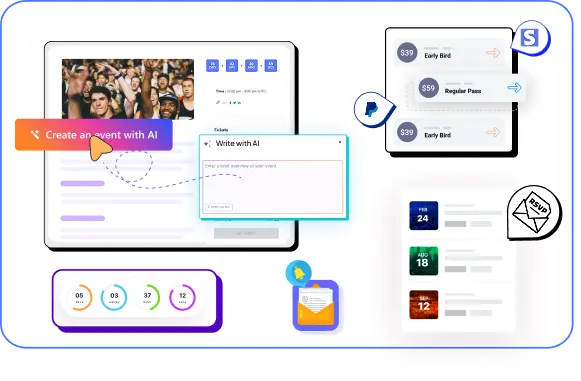
Create & manage events easily with Eventin event manager.
- ✅ Sell tickets
- ✅ Track attendees
- ✅ Automate reminders
Quick Overview
This guide explains how event pricing psychology helps you sell tickets faster and increase revenue using early bird pricing, tiered tickets, and real scarcity, and how Eventin makes these strategies easy to apply in WordPress.
- Why traditional event pricing often fails
- How early bird pricing influences buying decisions
- How tiered ticket pricing increases average order value
- How scarcity drives action without hurting trust
- Advanced pricing strategies for higher event revenue
- How Eventin supports modern event pricing in WordPress

What is event pricing psychology?
Event pricing psychology is the process of setting ticket prices based on how people think, feel, and make decisions about value.
People don’t decide based on price alone. They compare options, look for value, and react to urgency. A $50 ticket can feel expensive in one context and cheap in another, depending on how it is presented.
For example, showing a higher-priced VIP ticket can make your standard ticket look more affordable. Offering a limited-time discount can push people to act faster. Even small details like price endings ($49 vs $50) can influence buying behavior.
Why traditional pricing fails (and what works instead)
Many event organizers usually rely on flat-rate pricing to ensure a simple pricing setup. They pick a number that seems reasonable and set it as the ticket price. On paper, it feels fair and easy to manage, but in reality, it often leads to lower sales and limited engagement.
A single price doesn’t fit all buyers. Some people are ready to buy early, while others need more time or a reason to act. With the same price for everyone, there’s no urgency and no reward for buying early.
Another common issue is late discounts. Many organizers drop prices close to the event to boost sales. Lowering prices right before the event makes people wait to buy, but it also hurts trust.
Traditional pricing also fails to communicate value. A flat price does not show what someone gets or why one ticket might be worth more than another. Without context, the price feels random. This weakens your overall event ticket pricing strategy.
Here’s how to set the right base price for your event,
- Cost and Profit Target: Calculate your total event cost, including venue, speakers, marketing, and tools. Then decide your profit goal.
- Audience Willingness to Pay: Understand your audience. A corporate conference can charge much more than a community workshop.
- Competitor Benchmarking: Check similar events in your niche. If your price is too far off without added value, conversions will drop.
Avoid pricing and setup mistakes that can hurt your ticket sales. This guide on event ticketing mistakes and how to avoid them shows what to fix before it impacts your event performance.
Early bird pricing: The urgency game-changer
Early bird pricing works because it gives people a clear reason to act now instead of later. When done right, it speeds up ticket sales and builds early momentum for your event.
What is early bird pricing?
Early bird pricing for events is a time-limited discount offered to attendees who register in advance. It’s often one of the first phases in an event’s ticket sales timeline. The idea is simple: buy early and save money.
This strategy is widely used because it gives people a reason to act before they usually would. It helps build momentum during the early stages of event promotion and offers organizers an early look at interest and attendance trends.
Psychology behind early birds
Early bird pricing works because it creates urgency. When people know a discount is only available for a short time, they feel pressure to make a decision, so they decide faster.
From an event ticket sales optimization standpoint, this early boost in registrations can also help with planning, budgeting, and forecasting. The more you know about who’s attending early on, the easier it is to shape your marketing and logistics.
Best practices
To get the most out of early bird pricing, keep these tips in mind:
- Set a clear deadline: Be specific about when the deal ends or how many tickets are available. For example, “Early bird pricing ends August 15” or “Only 50 discounted tickets available.”
- Offer a real discount: Make the savings big enough to motivate people to act, like 15–25% off instead of just 5%.
- Promote it clearly: Use reminders, banners, and countdowns across your marketing channels to keep the offer visible.
- Stick to the deadline: Don’t extend it, or people won’t take future offers seriously.
Example:
Early Bird: $50 → Regular: $70 → Late: $90
Want to manage attendee sign-ups without extra tools? Learn how to create and manage registrations directly from your website using a free system in this guide on how to create attendee registration with a free ticketing system .
Tiered pricing: Creating options that sell themselves
Tiered pricing gives people choices. Instead of asking one simple yes or no question, you invite attendees to pick the option that fits them best.
What is tiered pricing?
Tiered ticket pricing offers different levels of tickets at various price points, each with its own set of benefits. For example, General Admission, VIP, or Group Passes. This gives attendees the freedom to choose what best fits their needs and budget.
Rather than one fixed price, tiered pricing encourages people to spend more by highlighting the added value at each level. It also lets you attract different types of attendees, from budget buyers to those wanting premium access or group options.
Psychology behind tiers
Tiered pricing works because people often choose the middle option. It’s called the decoy effect. When you show three pricing options, many people skip the cheapest one and avoid the most expensive, and eventually choose the middle as a “safe” or “balanced” option.
It also builds perceived value. When someone compares two ticket types and sees extra benefits for a slightly higher price, they decide the upgrade is worth it. This can lead to better event revenue optimization without a massive increase in costs.
How to set effective tiered structures
If you’re exploring how to price event tickets using tiers, here are a few guidelines:
- Limit options: Too many choices can confuse buyers. Two to four tiers usually work best.
- Highlight the best tier: Show which option offers the most value using labels like “Most Popular” or visual emphasis.
- Make upgrades meaningful: Add real benefits like early access, reserved seating, or exclusive content, not just a higher price.
- Use smart pricing gaps: Even minor differences make higher tiers look like a better deal.
Example:
- General: $50
- Standard: $80
- VIP: $120
Choosing the right pricing model becomes easier when you understand how ticket sales work. This event ticket sales guide explains how different pricing structures impact conversions.
Scarcity tactics: Trigger fomo to drive conversions
Scarcity works because people value things more when they feel limited. In events, scarcity is real. Seats are limited. Time is fixed. When you communicate this clearly, people act faster.
Scarcity makes people act
When people believe something is limited, they’re more likely to take action. Scarcity adds pressure and urgency, which can speed up the decision-making process. In event marketing, this means attendees buy tickets sooner rather than waiting until the last minute or missing out entirely.
Limited seating, exclusive access, and countdowns all trigger this reaction. If buyers think tickets might sell out or a price increase is coming, hesitation turns into action.
Psychology behind scarcity tactics
Scarcity works because of FOMO, or the fear of missing out. People don’t like to lose opportunities, especially ones that others are also trying to get. This is a key part of event pricing psychology, and it plays a big role in increasing conversions during the sales cycle.
It also ties into social proof. When people see others buying tickets or notice low availability, it makes the event seem more valuable and worth attending.
Proven scarcity tactics for events
If you want to apply scarcity tactics for events without overdoing it, here are some effective methods:
- Limit ticket quantities: Show how many tickets are available. For example: “Only 25 VIP tickets left.”
- Use countdown timers: These are helpful for early bird offers, pricing phases, or limited-time bundles. They provide a visible deadline.
- Show real-time updates: Always show how many people are viewing or buying tickets to create a sense of urgency.
- Create exclusive offers: If possible, give bonuses to early buyers, like free merchandise, special sessions, or priority check-in.
- Announce price increases in advance: Always let people know when pricing will go up. This encourages last-minute decisions and adds urgency without pressure.
Want to sell more tickets without increasing your budget? Explore this guide on how to increase ticket sales for an event and learn practical strategies to improve pricing, promotion, and audience engagement.
6 advanced event pricing strategies to ensure maximum revenue
Once early bird pricing, tiers, and scarcity are in place, you can go further. These advanced tactics help you increase event revenue without increasing attendance. The goal is to earn more from each buyer while keeping the decision simple.
Dynamic pricing
Dynamic pricing means your ticket price can increase based on certain conditions, like demand, time, or ticket quantity. For example, every 50 tickets sold might trigger a slight price increase.
This works well for high-demand events. Early buyers get rewarded. Late buyers pay more because the value feels proven. It also protects you from underpricing tickets early.
Remember, sudden price jumps confuse people. Small, planned increases work best and support long-term event ticket pricing strategy goals.
Bundle pricing
Bundle pricing involves selling two or more items together at a slightly reduced rate. This could mean offering a ticket + workshop combo, or group pricing where attendees save when buying multiple tickets at once.
It’s especially effective for business events, classes, or festivals where attendees might bring friends or colleagues. Bundles also make your pricing feel more valuable without lowering overall revenue.
This tactic works well with tiered pricing and helps increase your average order size.
Payment plans
High-ticket events often lose buyers at checkout. Not because people do not want to attend, but because paying everything at once feels heavy.
Payment plans reduce that friction. Splitting the price into smaller amounts makes the decision easier. People focus on the first payment, not the total.
This is especially effective for virtual conferences, training programs, and multi-day events.
Charm Pricing vs Rounded Pricing
Charm pricing uses numbers like $49 or $99. These prices feel lower and are more effective for increasing conversions, especially for workshops, webinars, and general audience events.
Rounded pricing uses clean numbers like $50 or $100. These feel more premium and are better suited for business conferences, exclusive events, or high-end experiences.
If your goal is to sell more tickets quickly, charm pricing works better. If your goal is to position your event as premium, rounded pricing is the better choice.
Price anchoring
Price anchoring means showing a higher price first so the next option feels more reasonable. For example, if you list a VIP ticket at $150 and a standard ticket at $80, most people will feel that $80 is a good deal.
You can also use comparisons like “Regular price $100 → Now $70” or highlight savings like “Save 30% today.” This shifts attention from price to value and makes your offer more appealing.
Referral incentives
Your attendees can also help drive sales. Offering a small discount or reward for each referral, like 10% off their next ticket or a bonus item, encourages people to share your event with friends or on social media.
Referral systems tap into trust and word-of-mouth, which can be more effective than paid ads. Even small rewards can lead to a meaningful increase in signups.
Some free WordPress event plugins, like Eventin, let you connect your ticketing system with affiliate or referral tools to track and reward referrals automatically.
Event Ticket Pricing Strategy Comparison
| Strategy | Best For | Why It Works | Risk |
|---|---|---|---|
| Early Bird | New events | Creates urgency | Weak if extended too long |
| Tiered Pricing | All events | Gives choice and upsell | Too many options confuse |
| Scarcity | Limited seats | Triggers FOMO | Fake scarcity hurts trust |
| Anchoring | Premium events | Makes price feel lower | Needs clear comparison |
| Dynamic Pricing | High demand | Maximizes revenue | Can frustrate late buyers |
How Eventin helps apply these pricing strategies without complexity
Understanding pricing psychology is one thing. Applying it correctly is where most event organizers struggle.
You need to manage multiple ticket types, control pricing stages, limit availability, and track sales—all without making the process complicated.
This is where using a dedicated event management system can help. For example, you can:
- Create early bird, regular, and VIP tickets
- Set limits for each ticket type
- Apply dynamic pricing rules
- Track ticket sales and revenue in one place
Eventin is built to support these pricing actions inside WordPress without extra tools or manual work. It is one of the best event management plugins that let you manage ticket types, pricing rules, availability, and deadlines from a single dashboard.
If you want a complete, hands-on walkthrough, including ticket customization and setup details, we have covered that in a dedicated guide here: How to Create a Customized Ticket with Eventin Event Manager.
If you prefer learning visually, this video walks through how ticket creation and customization work in Eventin.
How Ticket Pricing & Customization Works in Eventin
This short video shows how you can create and customize event tickets using Eventin. It covers ticket setup, pricing control, and customization options without technical steps.
🎟️ Start Selling Event Tickets the Smart Way
Setting the right price is just the first step. To fully apply pricing strategies like early bird, tiered tickets, and dynamic pricing, you need the right tools.
Eventin helps you create events, manage ticket types, control pricing stages, and sell tickets directly from your website—without relying on third-party platforms.
Get Started with Eventin →Common event pricing mistakes (and how to avoid them)
Even with the right strategies in place, simple pricing mistakes can affect your sales, attendee experience, and revenue. Let’s look at some of the most common issues and how you can avoid them using thoughtful event planning.
Mistake 1: Setting one flat price for everyone
A single ticket price is simple, but it doesn’t fit everyone. Without tiers or early bird deals, you miss people who want cheaper tickets or rewards for booking early.
How to avoid it: Use tiered ticket pricing to offer multiple price points and benefits. Add early bird phases to encourage early registration. Eventin makes it easy to set up and automate both.
Mistake 2: Ignoring urgency and scarcity
If there’s no reason to buy now, many people won’t. A lack of urgency leads to slow sales, late purchases, and more no-shows.
How to avoid it: Use countdown timers, show ticket limits, and promote deadlines clearly. Scarcity tactics for events only work when they are honest and transparent.
Mistake 3: Offering discounts without a clear plan
Random discounts or last-minute price drops can confuse buyers and damage trust. If someone pays full price and sees a discount the next day, they’re less likely to return.
How to avoid it: Plan all pricing phases. Announce them clearly and stick to your deadlines. Early bird discounts, bundles, or referral codes should be part of your overall event pricing strategy, not added at the last minute.
Mistake 4: Not testing or reviewing performance
Many organizers “set and forget” their pricing. But if you’re not tracking how each tier or discount performs, you’re missing out on insights that could improve future events.
How to avoid it: Use analytics tools to monitor sales by ticket type, timing, and source. Eventin provides built-in data to help you see what’s working and what’s not so that you can adjust your approach next time.
Mistake 5: Too many ticket tiers
More options do not mean more sales. Too many tiers confuse buyers. Stick to two or three clear choices with visible differences.
How to avoid it: Keep your pricing layout simple and your messaging clear. Stick to 2–4 tiers, and highlight the differences with short descriptions. Make the value of each ticket level easy to understand.
Not sure which tool to use for managing tickets and pricing? Explore this guide on the best WordPress event ticket plugins to compare features, pricing options, and find the right solution for your event setup.
FAQs
How do you calculate the right price for an event ticket?
Start by calculating your total event cost and profit goal. Then compare competitor pricing and adjust based on your audience’s willingness to pay. Your final ticket price should cover costs, stay competitive, and still leave room for discounts and tiered pricing.
How many pricing tiers should an event have?
Most events work best with 2 to 4 pricing tiers. This gives people enough choice without overwhelming them. A simple structure like General Admission, VIP, and Group Pass can cover most use cases.
How do you increase ticket sales without lowering the price?
You can increase perceived value instead of lowering the price. Add bonuses, highlight speakers, include exclusive access, or bundle additional benefits. This makes the ticket feel more valuable without reducing revenue.
When should you launch early bird pricing?
It’s best to launch early bird pricing as soon as your event registration opens. This builds early momentum and gives people a reason to buy now rather than later. Just make sure to clearly communicate the end date or quantity limit so buyers know when the offer expires.
What is the best pricing strategy for event tickets?
There is no single best strategy. Most successful events use a combination of early bird pricing, tiered tickets, and scarcity. This approach helps attract early buyers, offer flexible options, and increase overall revenue.
Can pricing psychology really increase event ticket sales?
Yes. Small changes in pricing structure—like adding tiers, using scarcity, or adjusting how prices are presented—can significantly impact how people perceive value and make decisions. This often leads to higher conversions without extra marketing.
Conclusion
Pricing your event correctly can make the difference between low attendance and a sold-out event.
Instead of guessing, use proven pricing psychology strategies like early bird offers, tiered tickets, scarcity, and value-based pricing. These approaches help you attract more attendees while increasing your overall revenue.
And if you want to apply these strategies without managing everything manually, using a dedicated event management tool can make the entire process easier and more efficient.
Using a plugin like Eventin makes it easier to apply these tactics. You can set up pricing phases, create multiple ticket types, manage countdowns, and track what’s working all from your WordPress dashboard.
Want to apply these pricing tactics without manual setup?
Eventin helps you manage early bird pricing, ticket tiers, and availability directly from your WordPress dashboard.
Get started with Eventin