AI Restaurant Agent Guide for Restaurant Owners


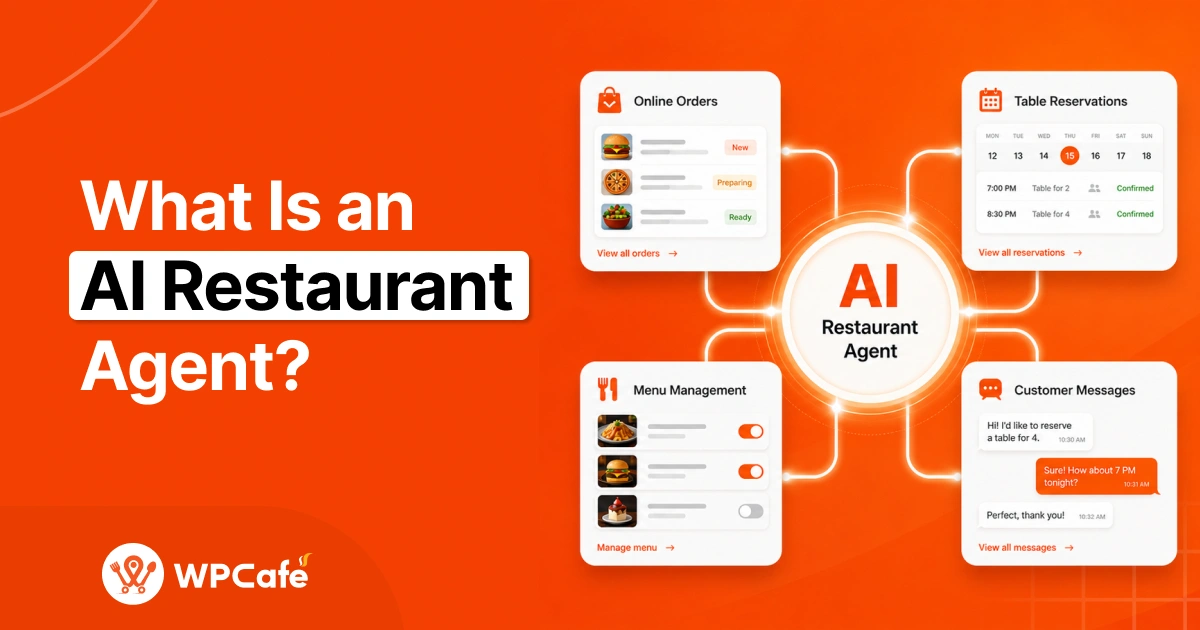
Table of Contents
An AI restaurant agent is a system that can take real action inside your restaurant’s software, not just answer questions about it. It can update your menu, pause online orders, confirm a reservation, or reply to a customer automatically. No one has to click through dashboards to make any of that happen.
Most restaurants don’t lose money because of bad food. They lose time. Time gets lost switching between an ordering platform, a reservation system, a delivery system, and customer messages. This is where AI agents for restaurants come in handy.
In this guide, you’ll learn what an AI restaurant agent is and how it differs from a chatbot or basic AI assistant. You’ll also see how it’s already changing the way restaurants handle orders, reservations, and daily operations.
- AI restaurant agents execute tasks directly, unlike chatbots that only answer questions.
- Restaurants lose time switching between separate ordering, reservation, and messaging systems.
- The agent follows four steps: collect data, understand commands, execute tasks, learn patterns.
- Aisentic is a free AI agent built into WPCafe, not a separate subscription tool.
- AI handles repetitive admin work, but staff still manage guest experience and judgment calls.
What Is an AI Restaurant Agent?
An AI restaurant agent is software that can carry out restaurant tasks on its own, once you give it an instruction.
That’s the core difference between this and most AI tools restaurants have used so far. Some AI tools answer questions and others generate content like menu descriptions or chatbot replies.
However, an AI agent goes a step further. It actually completes the task for you. To see why that matters it helps to look at three levels of AI.
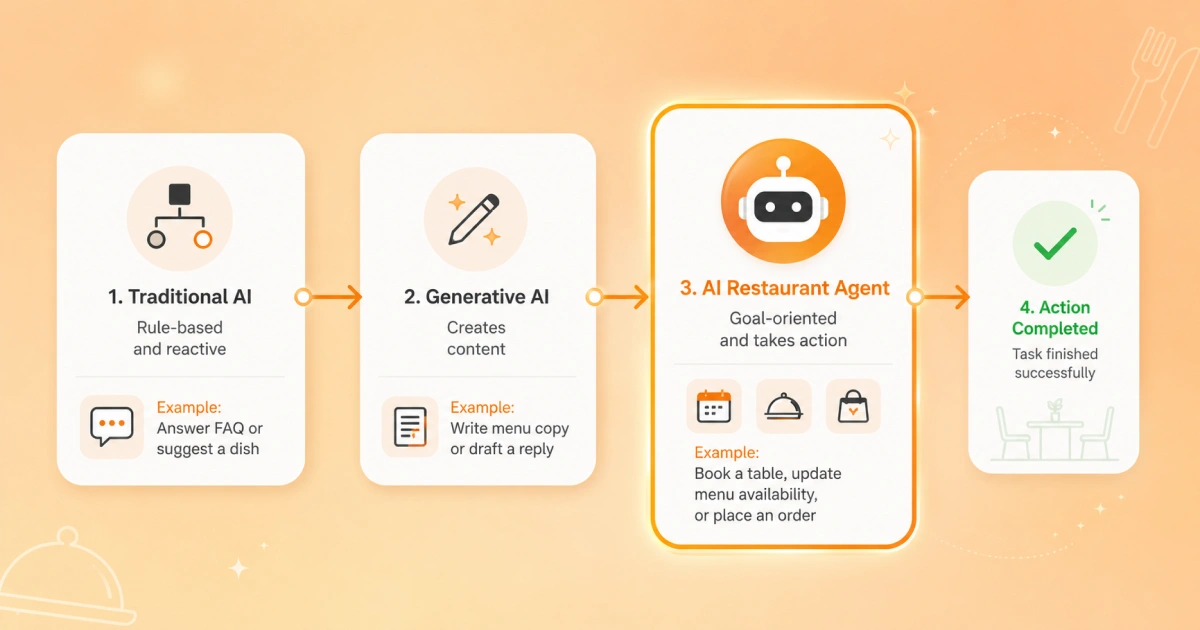
Traditional AI is rule-based and reactive and so it does exactly what it’s programmed to do, nothing more. A good example is recommending a menu item based on a customer’s past orders
Generative AI is built to create content, like writing a menu description or a chatbot reply. It’s useful, but a person still has to decide what happens with that output.
Agentic AI is goal-oriented and able to act without waiting for someone to step in. Using Agentic AI, you can look at restaurant data, decide what needs to happen, and carry out the task directly.
An AI restaurant agent belongs to this third category. Telling it “pause online orders for the next two hours” isn’t really a question. It’s an instruction, and the agent carries it out inside your restaurant’s system immediately. That’s the real line between an AI tool that talks and one that actually works.
Why Traditional Restaurant Software Isn’t Enough
Most restaurants already use some kind of restaurant management software. The problem isn’t that it doesn’t work. The problem is that it only works one way: a person has to operate it, every time.
Here’s where that breaks down in daily restaurant operations.
- Too many dashboards: Orders live in one tool, reservations in another, and delivery status in a third. Switching between them eats up time that should go to guests.
- Staff training: Every new hire has to learn each system separately before they can actually help run the floor.
- Manual configuration: Pausing orders, updating a menu, or blocking off a holiday slot usually means logging in and clicking through several screens.
- Third-party commissions: Many delivery and ordering platforms take a cut of every order, which adds up fast on tight margins.
- Missed orders: During a rush, a notification can get buried, and an order slips through unnoticed.
- Reservation conflicts: Without a live view across the dining room, double bookings happen more often than they should.
- Slow customer replies: A simple question about dietary options or pickup time can go unanswered longer than a guest expects.
None of this means traditional restaurant management software is badly built. It just wasn’t designed to act on its own. It can store data and show you information, but it still waits for a person to do something with it. Restaurants with autmation agents are built to remove this limitation.
How an AI Restaurant Agent Works
At a basic level, an AI agent follows a simple flow: data goes in, a decision gets made, and an action comes out. This is what separates real restaurant automation from a tool that just stores information and waits.
Here’s what happens at each step.
Step 1: Collect Restaurant Data
The agent connects to your existing systems, like your menu, orders, and reservation calendar. This is the foundation of AI restaurant management, since the agent can’t act on anything it can’t see.
Step 2: Understand Natural Language Commands
Instead of clicking through settings, you give it a plain instruction, like “show me today’s reservations.” This is what makes Restaurant AI feel less like software and more like an assistant you talk to.
Step 3: Execute Tasks Automatically
Once it understands the request, the agent carries it out directly inside your system. No extra clicks, no switching screens. The task gets done where your data already lives.
Step 4: Learn from Restaurant Operations
Over time, the agent picks up on patterns, like which menu items sell out fastest or when reservations spike. This is where AI restaurant software starts to feel genuinely useful instead of just convenient.
It’s not replacing your judgment. It’s reducing the manual work behind every small decision you already make.
Examples of What an AI Restaurant Agent Can Do
The idea of an automated restaurant agent stays abstract until you see it applied to real tasks. Here’s what it actually looks like in daily use.
Manage Online Ordering
The agent can pause orders, adjust prep-time windows, or turn off delivery for a specific branch with a single instruction. Instead of digging through settings during a rush, you just say what needs to change.
Handle Table Reservations
An AI agent can check availability, confirm bookings, and flag conflicts before they turn into a double-booked table. This is one of the clearest everyday uses of AI for restaurants, since reservations change constantly and rarely follow a fixed pattern.
Update Menus
Using an AI agent, you can update prices, mark an item as sold out, or adjust availability by branch without opening a separate editor for each change.
For a multi-location restaurant, this alone replaces a fair amount of manual upkeep that traditional restaurant management software still requires by hand.
Automate Customer Communication
The agent can answer common questions about hours, dietary options, or pickup times without pulling a staff member away from the floor. This is where it starts to function like an AI restaurant assistant rather than a static FAQ page or a chatbot that only follows scripts.
Generate Business Insights
By watching order and reservation patterns, the agent can flag which items are trending or when demand is about to spike.
That gives you a head start on prep and staffing decisions, instead of reacting after the rush has already started.
AI Restaurant Agent vs Traditional Restaurant Software
Here’s how the two approaches actually compare when you look past the marketing language.
| Factor | Traditional Restaurant Software | AI Restaurant Agent |
|---|---|---|
| Task execution | Manual, step-by-step through menus and settings | Carried out instantly from a plain instruction |
| Time required | Several minutes per task, more during a rush | Seconds, regardless of how busy service gets |
| Complexity | Separate dashboards for orders, menus, and reservations | One interface that acts across all of them |
| Staff workload | Someone has to operate every change by hand | The agent handles routine changes on its own |
| Error rate | Higher, especially under pressure or with new staff | Lower, since the system follows the instruction directly |
| Learning curve | Requires training on each tool separately | Plain language, little to no training needed |
| Adaptability | Reacts only when someone tells it to | Picks up on patterns and flags them on its own |
The pattern here is simple. Traditional software waits for you to act while an AI agent acts with you, in real time, without adding another tool to manage.
Benefits of Using an AI Restaurant Agent
Once an AI agent is actually running your daily tasks, the benefits show up fast. Here’s where they matter most.
Time Savings
Tasks that used to take several clicks across different dashboards now take a single instruction. That adds up to real hours back in a week, especially during busy service windows.
Revenue
Faster service and fewer missed orders mean fewer lost sales. An agent that catches a sold-out item or an open reservation slot before it becomes a problem keeps revenue moving instead of leaking out.
Fewer Mistakes
Manual entry is where most errors creep in, whether it’s a wrong order detail or a double-booked table. Since the agent acts directly on the instruction you give it, there’s no extra step where something can get typed wrong or missed.
Customer Satisfaction
Quicker replies to simple questions and fewer ordering mix-ups both lead to a smoother guest experience. Guests don’t notice the software behind it. They just notice that things worked.
Lower Operating Costs
Less time spent on admin work means staff can focus on tasks that actually need a person. This is one of the quieter benefits of restaurant automation, since it doesn’t show up as one big number, but as fewer small costs adding up over time.
Less Software Switching
Instead of opening five different tools to manage one restaurant, the agent works across your existing systems from one place. That alone removes a lot of daily friction.
No Commission Fees
Many third-party ordering and delivery platforms take a cut of every sale. An AI agent built into your own website doesn’t add another commission layer on top of orders you’re already handling.
AI Restaurant Agents and WordPress
WordPress already powers a large share of restaurant websites, mostly because it’s flexible and doesn’t lock you into one vendor.
What’s changed recently is that automated agents for restaurants can now run directly inside that same WordPress setup, instead of sitting in a separate app. That matters because most restaurant tools on WordPress already work together. An AI agent just gives you a single way to control all of them.
Here’s what that looks like in practice.
WooCommerce
Orders, payments, and checkout already run through WooCommerce on most WordPress restaurant sites. An AI agent can act on this data directly, like adjusting a product’s availability or checking recent order activity, without a separate integration step.
QR Ordering
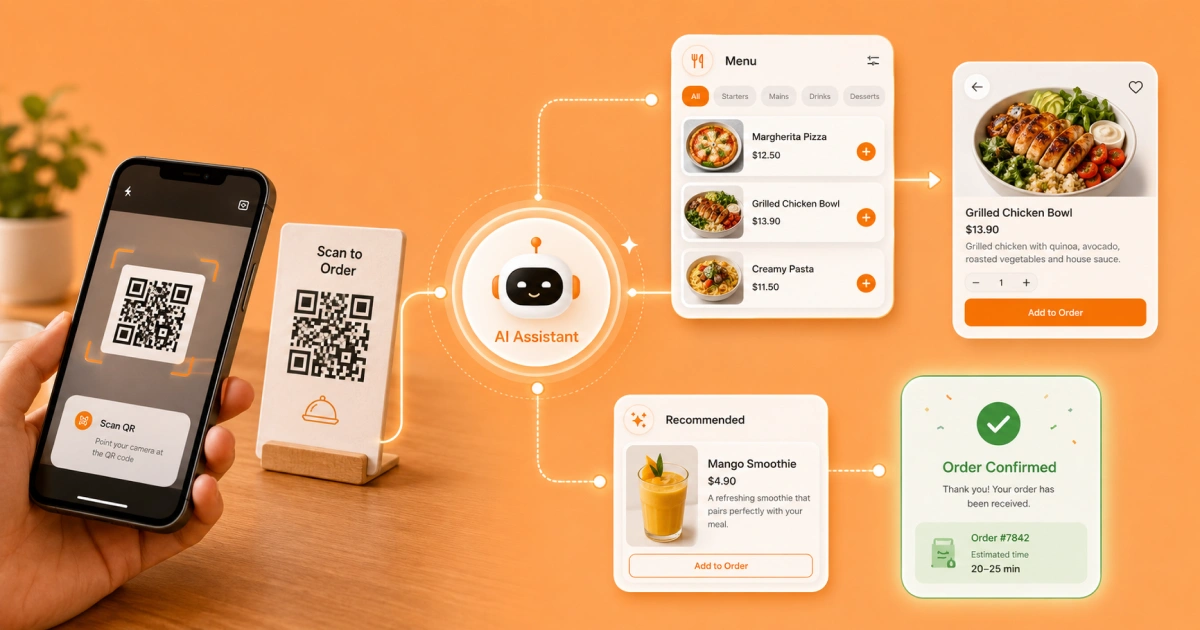
Guests scanning a table QR code are placing orders in real time. The agent can pause or resume this channel instantly, which matters most exactly when you don’t have time to dig through settings.
Reservations
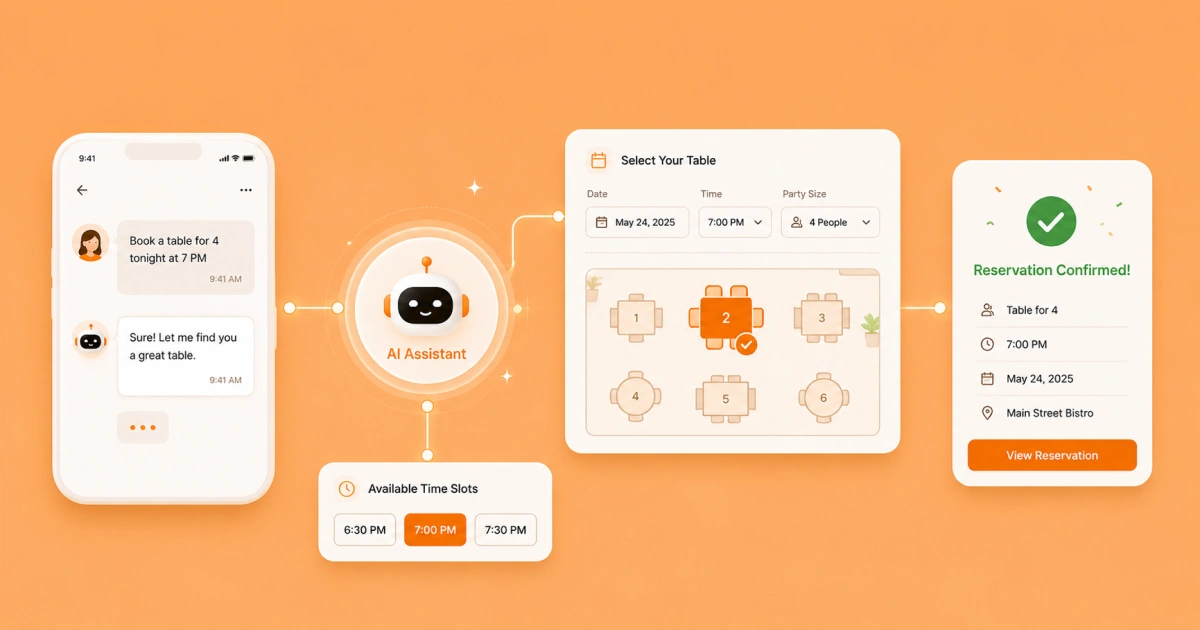
Booking conflicts and last-minute changes are easier to handle when the agent can check, confirm, or adjust a reservation the moment you ask it to, instead of opening a separate booking calendar.
Kitchen
Live order and reservation alerts mean kitchen staff see new activity as it happens. An agent that can also flag demand patterns gives the kitchen a head start before a rush actually hits.
Note: Follow this article to learn how to show instant order notifications on WooCommerce.
Payments
Since payments already run through your existing WordPress setup, the agent doesn’t introduce a new payment layer. It just gives you a faster way to check and manage what’s already there.
This is the real shift. A WordPress restaurant site isn’t just a website with plugins attached anymore. It’s becoming a system that can run itself, to a meaningful degree, from one place.
Meet Aisentic: AI Restaurant Agent Built into WPCafe
Everything described so far isn’t theoretical. It’s already running inside WPCafe, a WordPress restaurant management plugin, through a built-in AI agent called Aisentic.
Aisentic connects directly to your live WordPress and WooCommerce data, so it isn’t just answering questions about your restaurant. It’s acting on what’s actually happening on your site.
Here’s what that looks like in practice.
Natural Language Commands
You can type something like “turn off pickup and delivery for tomorrow” or “pause orders for the next two hours,” and it updates instantly. No menus, no manual navigation.
Predictive Menu Analysis
Aisentic looks at order patterns to flag high-demand items before a rush starts, which helps reduce prep waste and avoid running out of popular dishes mid-service.
Dynamic Upselling
During QR checkout, it can surface relevant order bumps based on what’s already in the cart and how busy the kitchen is at that moment.
Autonomous Customer Care
It can handle booking questions, dietary requests, and basic follow-ups after a visit, without a staff member stepping in for every message.
Aisentic comes built into WPCafe at no additional cost, so it’s not a separate subscription or a bolt-on tool. It’s one more way a WordPress restaurant site can run closer to how a restaurant actually operates, where decisions need to happen quickly and staff time is better spent with guests than with dashboards.
Ready to streamline your restaurant operations with AI? Explore the full WPCafe Features to see what’s possible, or check out WPCafe Pricing to find the plan that’s right for your business.
Is AI Replacing Restaurant Staff?
No. An AI agent for restaurants isn’t built to replace people. It’s built to handle the repetitive administrative work that pulls staff away from guests in the first place.
There’s a clear line here worth being honest about. An AI agent can pause an order channel, confirm a routine reservation, or answer a question about pickup times.
What it can’t do is read a guest’s mood at the table, smooth over a complaint, or make the kind of judgment call that comes from actually being in the room. That’s still a person’s job, and it probably always will be.
What changes is where staff time goes. Fewer minutes spent switching between dashboards or repeating the same answer to the same question means more time actually spent with guests.
A restaurant doesn’t run better because software replaced its people. It runs better because the people on the floor aren’t stuck doing work a system can already handle on its own.
Final Thoughts
Restaurant software has always been good at storing information. Menus, orders, reservations, all sitting there, waiting for someone to act on them.
An AI restaurant agent changes that. It acts on the data the moment you ask, without pulling staff away from guests.
Aisentic, built into WPCafe, is a practical example of this already running on WordPress. No separate tool to learn, no extra subscription. Just software that works with you instead of waiting on you.
Start Using WPCafe Today
Ready to take your events to new heights? Get WPCafe now and enjoy a seamless event management experience.
Frequently Asked Questions
Can AI manage restaurant reservations?
Yes. An AI restaurant agent can check availability, confirm bookings, and flag scheduling conflicts before they turn into a double-booked table.
Can AI take online food orders?
Yes. AI restaurant software can manage order channels directly, including pausing or resuming online ordering, adjusting prep-time windows, and handling QR-based ordering at the table.
Can AI improve restaurant customer service?
Yes. An AI restaurant assistant can answer common questions about hours, dietary options, or pickup times, which reduces wait times for simple requests that don’t need a staff member.
Can WordPress use AI for restaurant management?
Yes. AI for restaurants can now run directly inside a WordPress setup, connecting to existing tools like WooCommerce, QR ordering, and reservation systems instead of sitting in a separate app.
What is the difference between an AI chatbot and an AI agent?
A chatbot mainly answers questions or holds a conversation. An AI agent goes further by acting on those requests directly inside your restaurant’s software, without needing someone to carry out the task manually.