10 Customer Loyalty Program Ideas for WooCommerce Stores That Drive Repeat Purchases


Table of Contents
Customers often leave a WooCommerce store after one purchase because they have no clear reason to return. The right customer loyalty program ideas solve this problem by connecting purchases and other valuable actions with rewards customers can use later.
A WooCommerce loyalty program rewards actions such as purchasing, registering, reviewing products, or reaching a customer level. When the reward feels achievable and useful, customers have a practical reason to choose your store again.
This guide covers ten WooCommerce loyalty program ideas, suitable store types, practical examples, implementation steps, and the metrics you can use to measure repeat purchases.
Key Takeaways
An effective WooCommerce loyalty program connects each reward to a clear business goal. Before creating earning rules, decide whether you want to increase purchase frequency, order value, product engagement, or long-term customer retention.
- Give customers rewards that are valuable enough to influence their next purchase.
- Use different rules for new buyers, repeat customers, reviewers, and high-value shoppers.
- Match campaigns to specific products, categories, order values, or promotional periods.
- Keep earning and redemption rules simple so customers understand what they can gain.
- Measure customer behavior after launch instead of judging success only by the number of points issued.
Why Do These Loyalty Program Ideas Encourage Repeat Purchases?
Loyalty programs encourage repeat purchases by giving customers value they can use on a future order. Available points, progress toward a reward, or access to a higher level makes switching to another store less attractive.
Purchase rewards create a reason to return. Spending thresholds can influence cart value, while product and category bonuses guide attention toward selected inventory. Time-limited campaigns add urgency without reducing every product price.
For store owners, this creates more control than applying the same discount to every visitor. A sustainable program offers enough value to influence the next purchase without making the reward unaffordable for the business.
Loyalty rewards and immediate discounts influence different stages of the customer journey. Compare loyalty programs vs discounts to decide which approach better supports your repeat-purchase goal.
Customer Loyalty Program Ideas for WooCommerce Stores
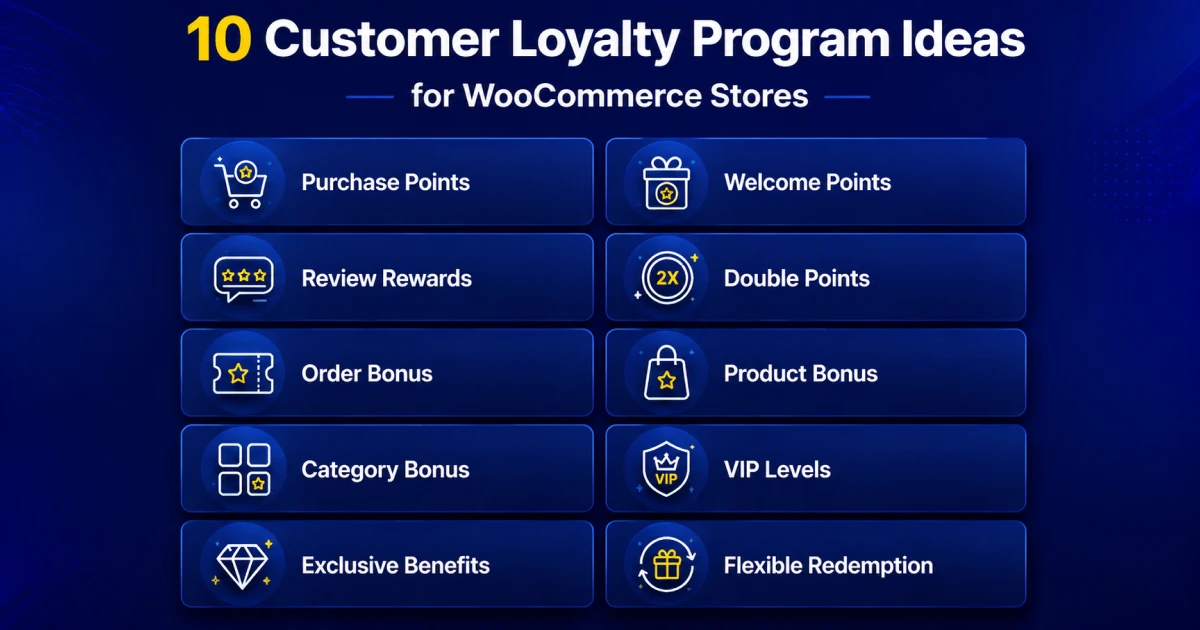
Each WooCommerce loyalty program idea below connects a customer action with a practical reward and measurable business outcome. Use the examples as starting points and adjust the values to match your margins and average order value.
1. Reward Every Completed WooCommerce Purchase
Rewarding every completed purchase gives customers an immediate reason to choose your store again. Each order builds a points balance that customers can later exchange for an available reward, making the next purchase feel more valuable.
For example, you could award one point for every $1 spent. A $50 order would earn 50 points. If 100 points provide a $5 reward, the customer receives a clear 5% return without reducing the current order price.
The earning rate should reflect your reward value, average order value, and profit margin. Use our practical guide to decide how many loyalty points you should give customers.
Best for: Stores that want a simple foundation for their loyalty program.
2. Give New Customers Welcome Points
Welcome points give first-time customers a head start before they make another purchase. A useful opening balance reduces the distance between joining your program and receiving the first reward, which can make returning feel achievable.
For example, a shopper could receive 50 welcome points after creating an account. If the first reward requires 100 points, the customer begins halfway toward redemption without receiving the full benefit immediately. Make sure the cost of the bonus fits your customer-acquisition budget.
Best for: New stores and businesses trying to convert guest buyers into registered customers.
3. Reward Customers for Product Reviews
Review rewards encourage verified buyers to share useful feedback after receiving their orders. Customers gain extra value from contributing, while your store gains product information that can help future shoppers make more confident decisions.
A practical rule might award 50 points for submitting a product review. Keep the reward the same regardless of whether the feedback is positive or critical. Reward the act of leaving an honest review, not the rating itself, and disclose that the reviewer received loyalty points. You should also moderate reviews using your normal store policy.
Product reviews also show that customer rewards can extend beyond completed orders. Explore more ways to use loyalty programs beyond ecommerce purchases.
Best for: Stores that need more customer feedback and stronger product-page engagement.
4. Run Limited-Time Double-Points Campaigns
A double-points campaign gives customers a stronger reason to purchase within a defined promotional period. It adds urgency without automatically reducing product prices, helping you create activity during slow weeks, launches, or seasonal events.
If customers normally earn one point per $1, you could raise the rate to two points per $1 for three days. Use a clear start date, end date, and campaign message so shoppers understand the opportunity. Avoid running these promotions too often, or the standard earning rate may feel less attractive.
Best for: Seasonal stores and businesses with predictable quiet periods.
5. Offer Bonus Points on High-Value Orders
High-value order bonuses motivate shoppers to increase their cart total to reach a visible earning threshold. This can improve average order value while preserving the regular prices of the products already in the cart.
For example, offer 25 additional points when an order reaches $100. Place the threshold slightly above your current average order value so it remains achievable without creating an excessive reward cost.
Best for: Stores selling complementary products or bundles.
6. Give Extra Points on Selected Products
Product-specific bonus points help you direct customer attention toward items that need greater visibility. They can support a new launch, promote a high-margin product, or create demand for inventory without applying a public price reduction.
Suppose a skincare store awards its normal purchase points plus 15 bonus points for a new serum. The extra value can draw attention to the product without changing its listed price. Select products that support a clear merchandising goal and state whether the bonus can be combined with other earning rules.
Best for: Beauty, fashion, electronics, and stores with frequent product launches.
7. Run Category-Based Bonus Campaigns
Category-based rewards promote a related group of products through one campaign. This is more efficient than creating separate rules for every item and gives customers flexibility to choose a qualifying product they genuinely want.
For example, a pet store could offer twice the usual points on all grooming products for one week. The campaign can increase awareness of the category and encourage customers to explore more than one item. Choose a category with a clear sales goal and avoid including unrelated products merely to expand the promotion.
Best for: Stores with large catalogs or seasonal collections.
8. Create VIP Loyalty Levels
VIP loyalty levels give frequent and high-value customers a visible path toward better rewards. Progress creates a longer-term reason to remain active because customers can gain more value as they move from one level to the next.
You might create Starter, Silver, and Gold levels with increasing earning multipliers. For example, Silver could begin at 500 points and Gold at 1,500 points, with stronger benefits at each stage. Keep the requirements understandable and make each upgrade meaningfully better than the previous level.
Best for: Stores with regular buyers and enough purchase history to support progression.
9. Give Exclusive Benefits to Higher-Tier Customers
Higher-tier benefits make VIP status useful beyond a larger points balance. Exclusive order discounts or free shipping can recognize your most valuable customers and give them a practical reason to maintain their loyalty level.
For example, Silver members might receive a small order discount, while Gold members receive free shipping on eligible purchases. Choose benefits customers can understand and that your margins can support. The value should increase with each level without making entry-level members feel ignored.
Best for: Stores where shipping cost or repeat-order savings strongly influence purchase decisions.
10. Let Customers Choose How to Redeem Their Points
Flexible redemption makes earned points useful to customers with different preferences. One shopper may value an order discount, while another may prefer free shipping or a free product.
For example, customers could exchange points for a fixed discount, percentage discount, coupon, free product, or shipping benefit. Set a clear points cost for every option and explain any minimum order or eligibility requirement before redemption. Start with a small selection so the program remains easy to understand.
Best for: Stores serving customers with varied order sizes and buying habits.
Which Loyalty Program Idea Is Best for Your Store?
The best loyalty program idea depends on what customers buy, how often they are likely to return, and which behavior you want to encourage. Choose one measurable goal first, then match it with a reward that is easy for customers to understand and affordable for your store to maintain.
| Store type or goal | Recommended loyalty idea | Why it fits |
|---|---|---|
| New WooCommerce stores | Welcome points and purchase rewards | These rules introduce the program and reward the two most important early actions: registering and purchasing. |
| Fashion and beauty stores | Product or category bonus points | Targeted bonuses can draw attention to new products, seasonal collections, or selected categories. |
| Food, pet, and consumable stores | Points on every purchase | Customers already have a natural reason to reorder, so purchase points add value to the next order. |
| Stores seeking larger carts | Spending-threshold bonuses | A bonus above the current average order value gives customers a specific reason to add another relevant item. |
| Established stores | VIP levels and tier benefits | Levels recognize frequent or high-value customers and provide additional benefits as their activity increases. |
| Stores with varied customer preferences | Flexible redemption options | Customers can select a discount, free shipping, or another available reward that is useful to them. |
Start with one purchase or signup rule and monitor how customers earn and redeem points. Add product campaigns, VIP levels, or additional rewards only when customer activity shows a clear reason to expand the program.
Your choice of plugin will determine which earning rules, conditions, reward types, and customer levels you can configure. Before implementing the program, compare Pointics with other WordPress loyalty plugins to identify which option supports the structure your store needs.
How Can You Implement These Loyalty Program Ideas with Pointics?
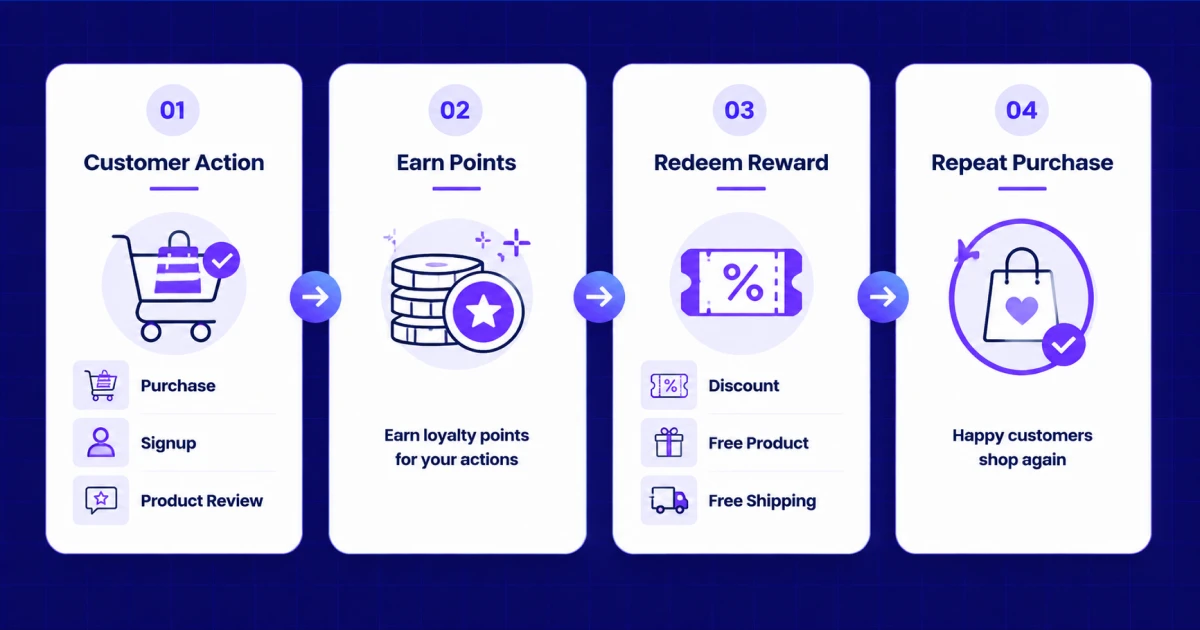
Pointics organizes earning rules, rewards, loyalty levels, customers, transactions, and analytics inside the WordPress dashboard. You can connect rewards to customer actions and limit campaigns using relevant conditions.
- Go to Pointics > Earning Rules and create a rule for purchases, account signup, or product reviews.
- Set the number of points customers will earn. For purchase rules, define how spending converts into points.
- Add conditions when the rule should apply only to a specific order amount, product, category, currency, user role, language, reservation status, first order, or promotional period. Use only the conditions relevant to your campaign.
- Open Rewards and choose how customers can redeem their points. Available reward types include fixed or percentage discounts, coupons, free products, free shipping, and manually configured rewards.
- Open Levels to create customer tiers based on spending, orders, points, or engagement. You can assign earning multipliers, order discounts, and free-shipping benefits to eligible levels.
- Test earning, level progress, and redemption with a customer account before announcing the program.
If you are starting from scratch, follow this step-by-step guide to building a customer loyalty program
How we verified Pointics: We reviewed the current Pointics dashboard and confirmed its earning rules, conditions, rewards, customer levels, transactions, and analytics sections. The campaign values in this article are examples, not universal recommendations.
How Should You Measure Loyalty Program Results?
Measure whether members return, purchase more often, and redeem the rewards they earn. Points issued alone cannot show success because a large unused balance may indicate that customers do not understand or value the available rewards.
Track repeat purchase rate, purchase frequency, average order value, redemption rate, and revenue from returning customers. Compare these metrics before and after launch to understand whether the program is changing customer behavior. Pointics records redemptions, redeemed points, transactions, customer activity, and membership level. Use WooCommerce Analytics to measure repeat orders, order value, and revenue because those outcomes extend beyond points activity.
FAQ
What is the best loyalty program for a WooCommerce store?
A purchase-based points program is the best starting option for most WooCommerce stores because it is simple to understand and manage. The right long-term program depends on your purchase frequency, average order value, profit margins, products, and customer behavior.
How do WooCommerce loyalty programs encourage repeat purchases?
WooCommerce loyalty programs encourage repeat purchases by giving customers points or benefits they can use on a future order. An available reward, progress toward redemption, or access to a higher loyalty level provides a practical reason to return to the same store.
How many loyalty points should WooCommerce customers receive?
The number of loyalty points customers should receive depends on the reward value, required spending, average order value, and profit margin. Start with a simple earning rate, calculate its actual cost, and confirm that the reward remains affordable as participation increases.
Are loyalty points better than regular discounts?
Loyalty points are generally better for encouraging a future purchase, while regular discounts are designed to influence the current order. WooCommerce stores can use both, but each incentive should support a separate goal without creating an unsustainable reward cost.
Build a Repeat-Purchase Program with Pointics
Ready to give customers a clear reason to return? Start with one earning rule, choose a reward your margins can support, and improve the program using real customer activity. Explore Pointics and create your first WooCommerce loyalty campaign.

