WooCommerce Food Ordering vs SaaS Platforms: Which Is Better for Restaurants in 2026?


Table of Contents
Are you feeling stuck trying to choose between WooCommerce and SaaS food ordering platforms for your restaurant?
In 2026, many small restaurant owners and startup food businesses have the same question, and it’s normal. On one side, SaaS platforms look simple and offer ready-made tools, but they often come with high monthly fees and per-order charges.
On the other side, WooCommerce food ordering feels more flexible, costs less, and even lets you start for free, but it needs a website.
So, WooCommerce or SaaS,which option is actually better for small restaurants?
Don’t worry. In this blog, we’ll break down both options in a simple way. You’ll see the real pros, cons, and costs, so you can choose what works best for your restaurant business.

WooCommerce vs SaaS food ordering platforms: Quick comparison
| Feature | WooCommerce (WordPress) Food Ordering | SaaS Food Ordering Platforms |
| Setup cost | Low or free to start | Usually paid onboarding |
| Monthly fees | Optional, depends on hosting | Fixed monthly subscription |
| Per-order commission | No commission | Often takes a cut per order |
| Ownership | You own your website and data | Platform controls the system |
| Customization | High flexibility | Limited customization |
| Branding | Fully your brand | Platform branding included |
| Menu control | Full control over items and pricing | Restricted by platform rules |
| Payment options | Choose your own gateways | Limited to platform choices |
| Scalability | Grows with your business | Gets more expensive as you grow |
| Long-term cost | Lower over time | Higher over time |
| Best for | Small restaurants planning to grow | Quick setup with minimal control |
📚 Related reading: Why WordPress is The Perfect Platform for Your Restaurant Website
WooCommerce or SaaS? Which option is better for small restaurants
Choosing between WooCommerce and SaaS food ordering platforms can feel confusing for small restaurant owners. Both options work, but they solve different problems.
The better choice depends on how much you want to spend, how much control you need, and how you plan to grow your restaurant.
Let’s look at when each option makes more sense for small restaurants.
When WooCommerce is the better choice
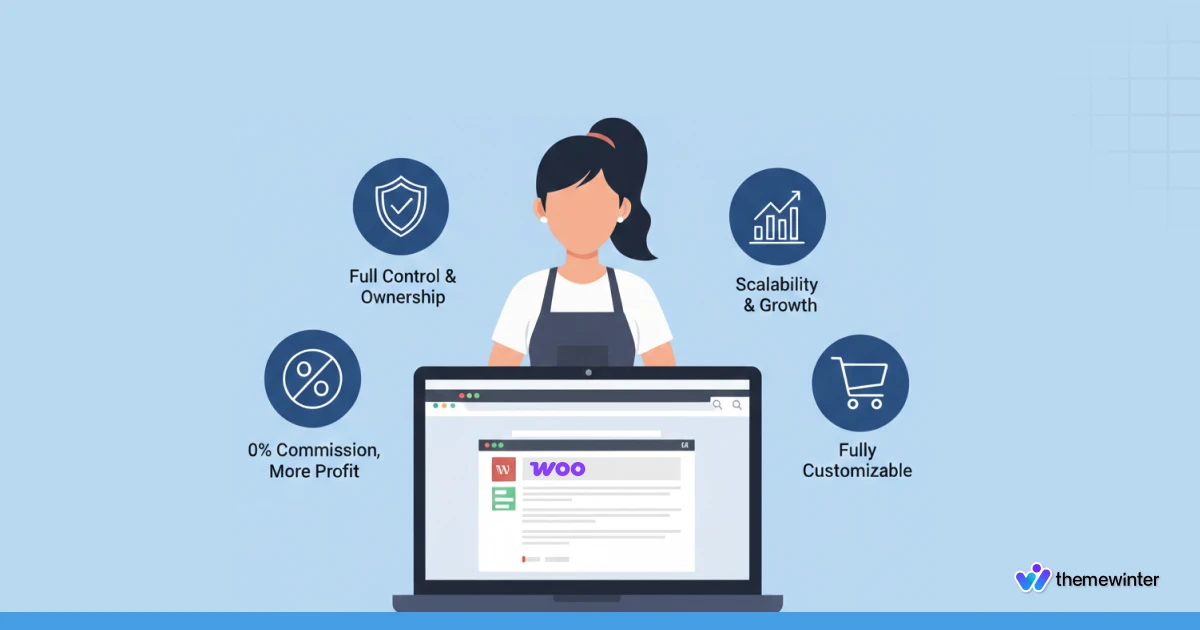
WooCommerce is a better option for small restaurants that want more control over their online ordering and don’t want to lose money on monthly fees or per-order commissions. Instead of relying on a third-party platform, everything runs on your own website, under your rules.
For example, a local pizza shop or a small café taking 10–30 orders a day can lose a lot of money to SaaS commissions over time.
With WooCommerce, those extra fees don’t exist. You pay for hosting and setup, but the ordering system itself can run without taking a cut from every sale.
WooCommerce works best when:
- You want to avoid monthly subscriptions and order commissions
- You prefer to own your website, menu, and customer data
- You want full control over pricing, discounts, delivery rules, and pickup options
- You plan to grow your restaurant without increasing platform costs
- You want your online ordering to match your brand, not a third-party platform
Many restaurants use WooCommerce along with a restaurant-focused management plugin to handle food menus, online orders, pickup or delivery options, and table reservations in one place.
This setup allows a restaurant to start simple and expand features only when needed, without being locked into a platform.
Another advantage is flexibility. A food business can begin with a basic setup, test online ordering, and later add advanced options like scheduled orders, discounts, or multiple locations, all without switching platforms.
If long-term savings, flexibility, and ownership matter to your restaurant, WooCommerce often becomes the more practical choice.
📚 Related reading: How to Sell Food Online in 2026: A Step-by-Step Guide for Beginners
When SaaS food ordering platforms make sense
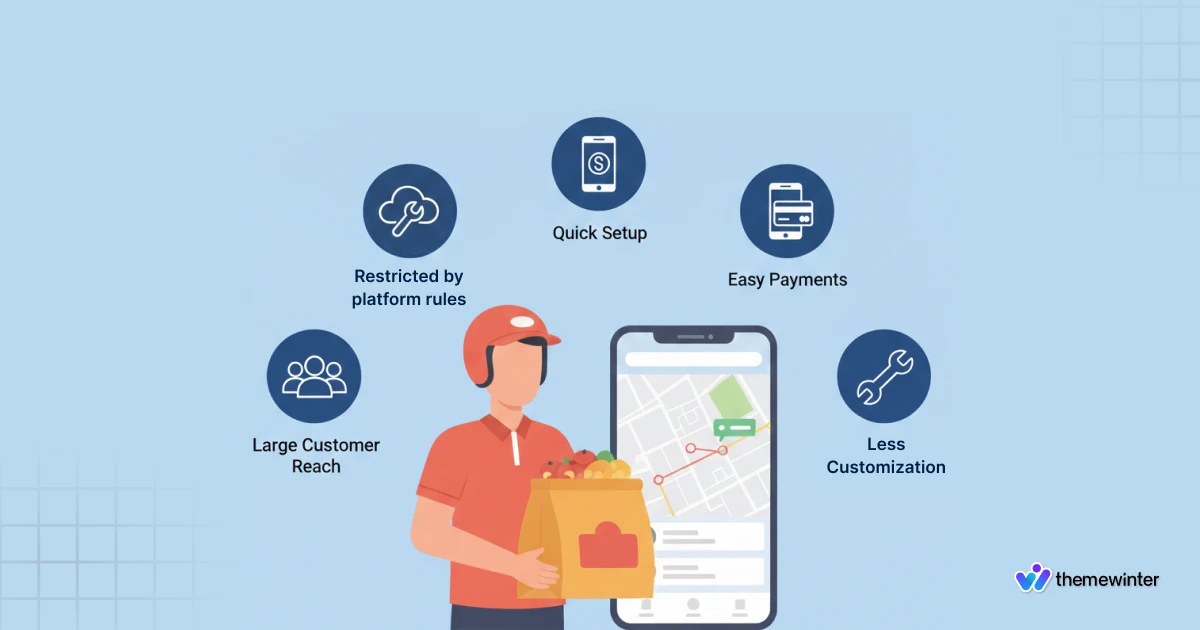
SaaS food ordering platforms can make sense for restaurants that want to get online as fast as possible and don’t want to deal with website setup or technical work.
Everything is hosted and managed by the platform, so you can start taking orders with minimal effort.
This option usually works best when:
- You need a quick setup with no website involved
- You don’t want to manage hosting, updates, or plugins
- You’re running a temporary or short-term food business
- You’re okay with monthly fees and per-order charges
- You prefer a ready-made system over customization
For example, a new food startup testing a concept, a food truck, or a pop-up restaurant may choose a SaaS platform just to get orders running quickly. In these cases, speed is often more important than long-term cost or control.
Cost-wise, SaaS platforms usually charge:
- A monthly subscription fee
- Additional per-order or transaction fees
- Extra charges for premium features or higher order volume
Over time, these costs can grow as orders increase. What feels affordable at the start can become expensive for busy restaurants.
Some popular SaaS food ordering platforms include:
- Toast – often used by full-service restaurants with POS needs
- ChowNow – focused on branded ordering with monthly plans
- Square Online – simple setup, tied closely to Square payments
SaaS platforms are mainly built for convenience and speed. They remove setup work but also limit flexibility. For restaurants that value simplicity over control, SaaS food ordering platforms can be a reasonable short-term choice.
📚 Related reading: Seasonal Marketing Ideas to Drive More Restaurant Orders
Cost vs control comparison (decision driver)
| Factor | WooCommerce (WordPress) | SaaS Food Ordering Platforms |
| Upfront cost | $20–$150 (domain + hosting + theme/plugin) | $0–$100 (signup starts free or low) |
| Monthly cost | $10–$50 (hosting) | $50–$300+ (platform fee) |
| Per-order fees | $0 | $0.50–$2+ per order |
| Cost as orders grow | Mostly stable | Rises with order volume |
| Control over pricing | Full | Limited |
| Control over menu | Full | Limited by platform rules |
| Customer data | You own it | Platform owns it |
| Custom features | You choose and add | Only what platform offers |
| Branding control | Full branding | Platform branding shown |
| Long-term value | Lower cost over time | Higher cost over |
Expert recommendations for a startup food ordering business
Starting a food business is not easy. Most small startup restaurant owners budget is very limited in the beginning. That’s why starting a food business on WordPress makes sense.
You only need to spend a small amount to build a website. After that, there are no forced software fees or long-term platform costs.
To handle online food orders, WooCommerce (which is free) works smoothly with WordPress. It helps you take orders and payments without paying monthly fees or extra charges for each order. This keeps you in control of both your business and your costs.
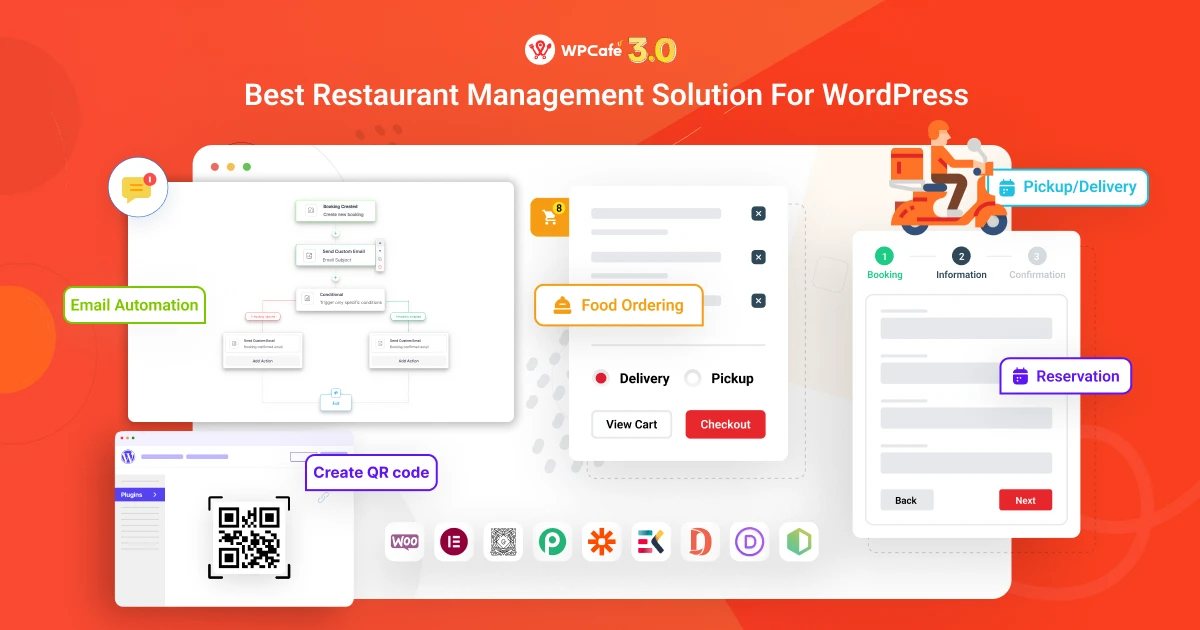
Additionally, to manage food menus, pickup, and delivery, many restaurants use WPCafe, a restaurant management plugin that works with WooCommerce. With its free version, you can run your entire food ordering setup without additional cost.
Note: As your business grows, this setup grows with you. When you need more advanced features like reservations, multi-vendor options, or extended restaurant tools, you can upgrade later. There’s no need to change platforms or rebuild your system.
FAQs
WooCommerce food ordering vs SaaS platforms: which one scales better?
-In WooCommerce food ordering vs SaaS platforms, WooCommerce scales better. As order volume grows, your costs stay stable. SaaS platforms usually increase fees as your business grows.
Can WooCommerce and WPCafe replace SaaS restaurant food ordering software?
-For many restaurants, yes. WooCommerce combined with WPCafe can replace paid restaurant food ordering software by offering similar features with more control and lower long-term cost.
Do I need technical skills to use WooCommerce and WPCafe?
-No advanced skills are needed. Both WooCommerce and WPCafe are beginner-friendly and designed for small restaurant owners.
Can I start free with WooCommerce food ordering?
-Yes. You can start WooCommerce food ordering with free tools and plugins. This makes it a strong choice for startups and small restaurants with limited budgets.
Does WooCommerce charge commission per order?
-No. A WooCommerce restaurant ordering system does not charge commission on orders. You only pay standard payment gateway fees, unlike many SaaS platforms that charge per order.
Is WooCommerce good for food ordering?
-Yes, WooCommerce food ordering works very well for small restaurants. It lets you run online orders on your own website without monthly fees or per-order commissions. You stay in full control of pricing, menu, and customer data.