10 Best WordPress Event Calendar Plugins in 2026 (Compared)



Table of Contents
Choosing the best WordPress calendar plugin depends on one question: do you only want to show events, or do you also need registrations and ticket sales?
Some plugins just display a calendar or connect with Google Calendar. Others, like Eventin, our own WordPress event calendar plugin, add tickets, attendee lists and check-in.
In this guide, we compare the best WordPress event calendar plugins based on calendar views, recurring events, ticketing, Google Calendar and iCal sync, Elementor compatibility, ease of use, and pricing. This guide helps you to choose the right fit for your event website.

Quick comparison of the top WordPress event calendar plugins
If you only need a classic event calendar, choose The Events Calendar. If you need a calendar, registrations, ticket sales and attendee management in one plugin, choose Eventin.
- Calendar + ticket sales: Eventin
- Classic event calendar: The Events Calendar
- Free plugin with bookings: Events Manager
- Complex recurring events: Event Organiser
- Lightweight calendar: Sugar Calendar
- Events plus appointments: Amelia
- Showing a Google Calendar: Simple Calendar
WordPress.org ratings, installs and prices checked in October 2026. Some prices are first-year or sale prices, so check the plugin’s checkout page before you buy.
| Plugin | Best for | WP.org rating | Active installs | Free version | Recurring events | Ticketing/Booking | Starting price |
|---|---|---|---|---|---|---|---|
| Eventin | All-in-one events, registrations and ticket sales | 4.7/5 (405) | 10,000+ | Yes | Yes | Built in (WooCommerce, Stripe, PayPal) | Free; Pro from $89/yr |
| The Events Calendar | A classic, widely used event calendar | 4.2/5 (2,456) | 600,000+ | Yes | Paid plans | Separate Event Tickets plugin; paid plans | Free; paid from $259/yr |
| Events Manager | Free event bookings | 4.2/5 (550) | 60,000+ | Yes | Yes | Built in; online payments in Pro | Free; Pro from $89/yr |
| Amelia | Appointments plus events | 4.6/5 (790) | 90,000+ | Yes | Standard plan and up | Built in; event features from Standard plan | Free; paid from $49/yr |
| Sugar Calendar | A lightweight, simple calendar | 4.5/5 (24) | 10,000+ | Yes | Pro | Built in (Stripe) | Free; Pro from $49.50/yr (first year) |
| Modern Events Calendar | Calendar layouts and display options | Not on WP.org | n/a | Lite (from developer) | Yes | Pro | Free Lite; Pro from $99/yr |
| EventON | A visual event calendar design | 4.1/5 (44) | 6,000+ | Lite | Yes | Add-on (basic PayPal in Lite) | Free Lite; full version $60 one-time |
| WP Event Manager | Event listings and front-end submissions | 4.0/5 (249) | 20,000+ | Yes | Paid bundles | Paid add-on | Free; add-ons from $49/yr |
| Event Organiser | Complex recurring schedules | 4.6/5 (140) | 20,000+ | Yes | Yes | Pro | Free; Pro from £50 |
| Simple Calendar | Showing a Google Calendar on WordPress | 3.8/5 (397) | 50,000+ | Yes | From Google Calendar | No | Free; paid from $99/yr |
Here is one of our review For top 5 among our selected WordPress event calendar plugins.
What to look for in a WordPress calendar plugin
Before you pick the best WordPress calendar plugins, think about what you actually need. Some calendar tools are simple, while others include complete booking systems and ticketing system. Here’s what to check before installing:
- Event booking: Choose a plugin that supports event booking, recurring events, and attendee management if you need more than a simple calendar.
- Design and customization: Go for a clean, modern layout that matches your site. Make sure you can adjust colors, views, and event styles easily.
- Mobile responsiveness: Most visitors browse on phones. The event calendar plugin should display event calendars and booking forms clearly on all devices.
- Plugin compatibility: Check that it works well with builders and tools like Elementor, Divi, Gutenberg, and WooCommerce to avoid conflicts.
- Maps and integrations: For offline events or hosting a workshop or a large conference, ensure it connects with Google Maps, Google Calendar, or iCal to show directions and sync schedules.
- Ease of use: Pick something simple to manage. Look for drag-and-drop editing, quick event creation, and multiple calendar views (day, week, month).
How we compared these WordPress calendar plugins
We reviewed each plugin’s official website, documentation, pricing page and WordPress.org listing, and read recent user reviews and support threads. Ratings, installs and prices were checked in October 2026. Here’s what we looked at:
- Ease of setup: how many steps it takes to create your first event or calendar, based on each plugin’s setup guide.
- Core features:event creation, recurring events, bookings, ticket sales, and integrations like Google Calendar or Zoom, plus which of these are free and which are paid.
- Design and customization: the calendar views and layouts each plugin offers, and how well it fits different WordPress themes without code.
- Compatibility: support for Elementor, Divi, Gutenberg and WooCommerce.
- Updates and support: how actively each plugin is maintained, and what recent WordPress.org reviews say about bugs and support.
- Pricing and value: free vs. paid plans, ticket fees, and what you actually get at each price.
Best event calendar plugin for Elementor with Google Calendar sync
If your site runs on Elementor, look for two things: real Elementor widgets (not just a shortcode you paste in) and a Google Calendar option that matches what you actually need.
That last part trips people up, because “Google Calendar support” can mean four different things:
- Add-to-calendar button: a visitor saves one event to their own Google Calendar.
- Calendar feed: visitors subscribe once and new events appear for them automatically.
- Google Calendar display: you manage events in Google Calendar and your site shows them.
- Two-way sync: changes on either side update the other. Few event plugins offer this.
| Plugin | Elementor | Google Calendar |
|---|---|---|
| Eventin | 10+ widgets (free) | Google, iCal, Outlook and Yahoo calendar sync (free) |
| Sugar Calendar | Widgets (free) | Add-to-calendar (free); subscription feeds on paid plans |
| Amelia | Widget (free) | Two-way Google sync for bookings (Standard plan and up) |
| The Events Calendar | Widgets with paid Events Calendar Pro only | Export to Google Calendar; no two-way sync |
| Simple Calendar | Via shortcode | Displays a Google Calendar (needs a Google API key) |
You can choose Eventin if you want Elementor widgets, calendar sync and ticketing in one plugin. Simple Calendar if your events already live in Google Calendar and you only need to show them. Amelia if you run appointments and need true two-way sync so bookings never clash with your Google schedule.
Event calendar plugin vs. event management plugin: which do you need?
A WordPress event calendar plugin shows your events: dates, times, locations and calendar views. An event management plugin does that too, but it also handles the work around the event, like sign-ups, ticket sales, payments and check-in.
| Event calendar plugin | Event management plugin | |
|---|---|---|
| Main job | Show what’s on | Run the event, from sign-up to check-in |
| Typical features | Month, week and list views, recurring events, add-to-calendar links | Registration forms, tickets, payments, attendee lists, QR check-in |
| Good for | Churches, schools, clubs, venues | Conferences, workshops, paid classes, webinars |
| Examples from this list | Simple Calendar, Event Organiser, The Events Calendar (free version) | Eventin, Events Manager |
A simple rule, if you only need people to see what’s on, a calendar plugin is enough. If you need to know who’s coming or take payments, you need an event management plugin. For more on that side, see our guide to WordPress event management plugins.
Top WordPress calendar plugins to manage events and bookings
Here’s a closer look at each plugin: what it does well, where it falls short, and what it costs. Prices were checked in October 2026.
1. Eventin: best for calendars with ticket sales
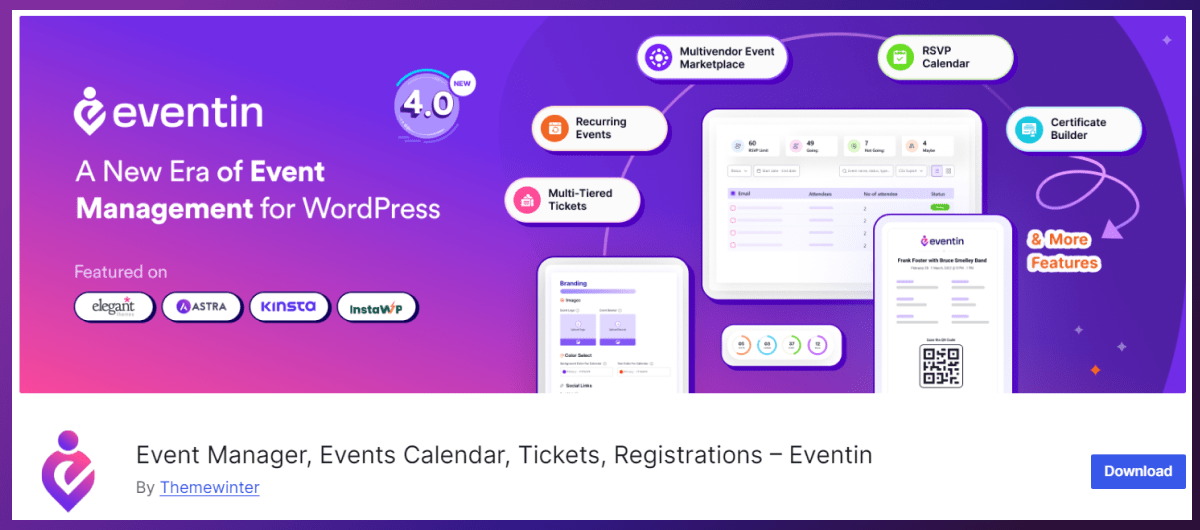
Eventin is for sites that need more than a calendar. You can list events, take registrations, sell tickets and check guests in from one plugin, without stacking add-ons. It works for in-person, online and hybrid events, from single workshops to recurring classes.
If you want to see how the calendar itself works, from calendar views and filters to front-end setup, take a closer look at Eventin’s WordPress event calendar features.
What stands out
- Recurring events, multi-tier tickets (Early Bird, VIP, Group), RSVP and QR check-in
- Sell tickets with WooCommerce, Stripe or PayPal
- Google Calendar, iCal and Outlook sync, plus Zoom and Google Meet
- Front-end event submission and support for multiple organizers
- Elementor widgets, and you can design event pages and tickets in Elementor
- Pro adds AI event creation, email automation, seat maps and certificates
Pros: calendar, registration and ticketing in one place; one Pro plan includes all features, with no separate add-ons to buy
Cons: more than you need for a simple calendar; major updates have sometimes needed follow-up fixes
Pricing: free version; Pro from $89/year (2 sites) or $119 lifetime, with a 15-day money-back guarantee. View more about Eventin Pricing.
Choose it if you sell tickets, manage attendees or run paid events. Skip it if you only need to display a few dates.
2. The Events Calendar: best for a classic event calendar
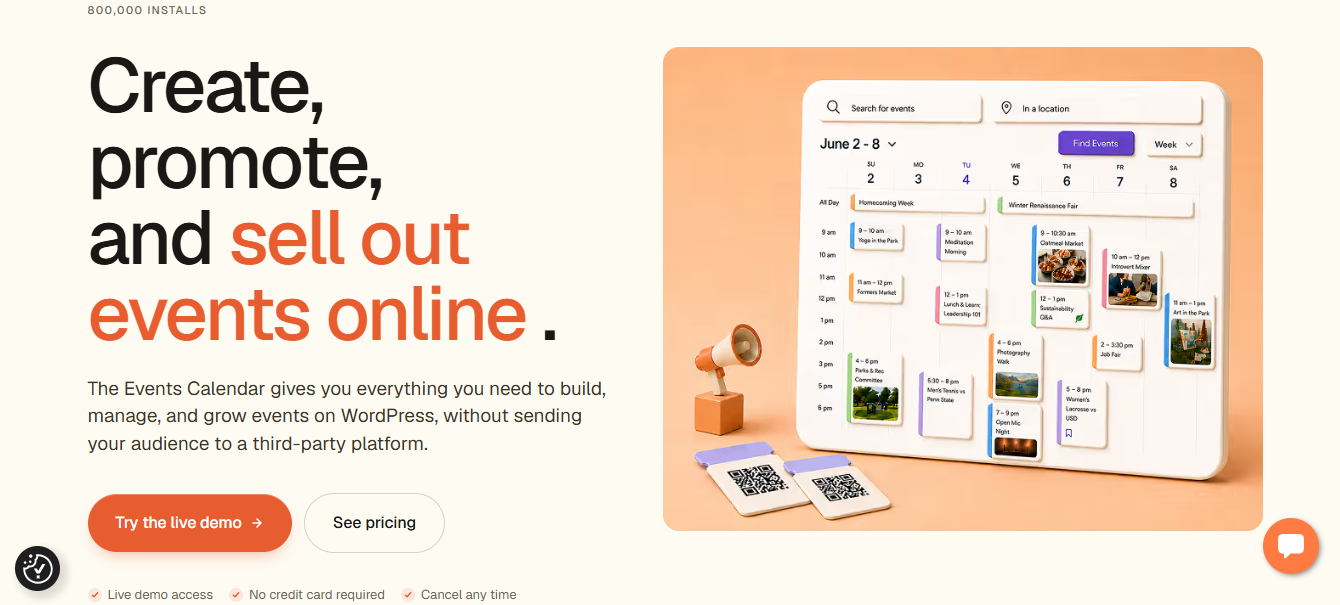
The Events Calendar is the most installed plugin on this list, with 600,000+ active sites. It’s now owned by Nexcess, part of Liquid Web. The free version gives you a clean, reliable calendar that fits most themes, and you add paid plans when you need more.
What stands out
- Month, list and day views in the free version, with saved venues and organizers
- Built-in event schema, plus CSV import
- Export events to Google Calendar and iCal
- Paid plans add week, photo and map views, recurring events, ticketing and community event submissions
- A huge user base, so tutorials and help are easy to find
Pros: dependable for large public calendars; beginner friendly
Cons:
- Recurring events need a paid plan.
- The free Event Tickets plugin and the Essentials plan charge a 2% ticket fee.
- Elementor widgets need a paid plan.
- No two-way Google Calendar sync.
- Recent reviews complain about support since the ownership change.
Pricing: free version; Essentials $259/year (recurring events, ticket sales); Pro $399/year (no ticket fee, QR check-in app, WooCommerce tickets); Elite $599/year (seat maps, email campaigns)
Choose it if you need a trusted public calendar with many views. Skip it if you want recurring events or ticketing without paying $259+ a year.
See how it compares in our Eventin vs The Events Calendar breakdown.
3. Events Manager: best free WordPress event registration plugin

Events Manager has been around since 2008, and it’s still one of the few free plugins that takes bookings. If you need a free WordPress calendar plugin with recurring events and registrations, start here.
What stands out
- Complex recurring events and timeslots in the free version
- Bookings for members or guests, with multiple ticket types
- iCal feed and add-to-calendar buttons for Google, Outlook and Apple
- Works with BuddyPress and multisite, which makes it good for community calendars
Pros: a lot of features for free; good for clubs, associations and community groups
Cons: dated admin; online payments, coupons and PDF tickets need Pro, and Pro has no refunds
Pricing: free version; Pro from $89/year at the time of writing (regular price $129)
Choose it if you need free event registration. Skip it if you want a modern interface or online payments without paying.
4. Amelia: best WordPress calendar and booking plugin
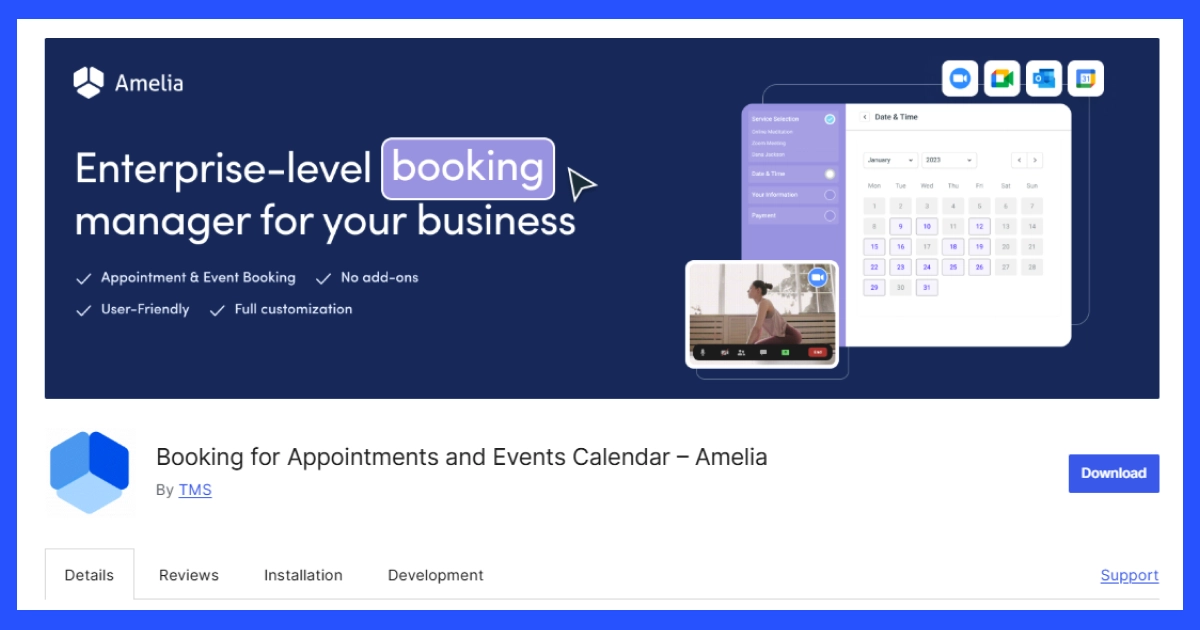
Amelia is mainly a booking plugin for appointments, but it also handles events. Studios, coaches and clinics use it when they run both one-to-one sessions and group events.
What stands out
- Step-by-step booking form with email and SMS notifications
- Widgets for Elementor, Divi and Gutenberg
- Google Calendar sync that blocks your busy times (Standard plan and up)
Pros: polished booking experience; 90,000+ active installs
Cons: the free Lite version is limited; event tickets and recurring events need the Standard plan
Pricing: free Lite version; paid plans from $49/year; event features start on Standard at $99/year
Choose it if you need calendar scheduling and event bookings together. Skip it if you mainly sell tickets to conferences.
See our Amelia vs Eventin comparison.
5. Sugar Calendar: best lightweight free calendar plugin for WordPress

Sugar Calendar keeps things simple and fast. It’s made by the team behind WPForms, and even the free version can take registrations and sell tickets.
What stands out
- Month, week and day views through blocks, Elementor widgets or shortcodes
- Ticket sales through Stripe in the free version
- One-click migration from The Events Calendar on paid plans
Pros: light and quick to set up; a good alternative to The Events Calendar if you want something simpler
Cons:
- Recurring events need a paid plan.
- The free and Basic plans take a 3% fee per ticket order.
- Only 24 reviews on WordPress.org so far.
Pricing: free version; Basic $49.50 for the first year, $99/year after
Choose it if you want a clean calendar with simple ticketing. Skip it if you need recurring events for free.
6. Modern Events Calendar: best for calendar layouts in Elementor and Divi
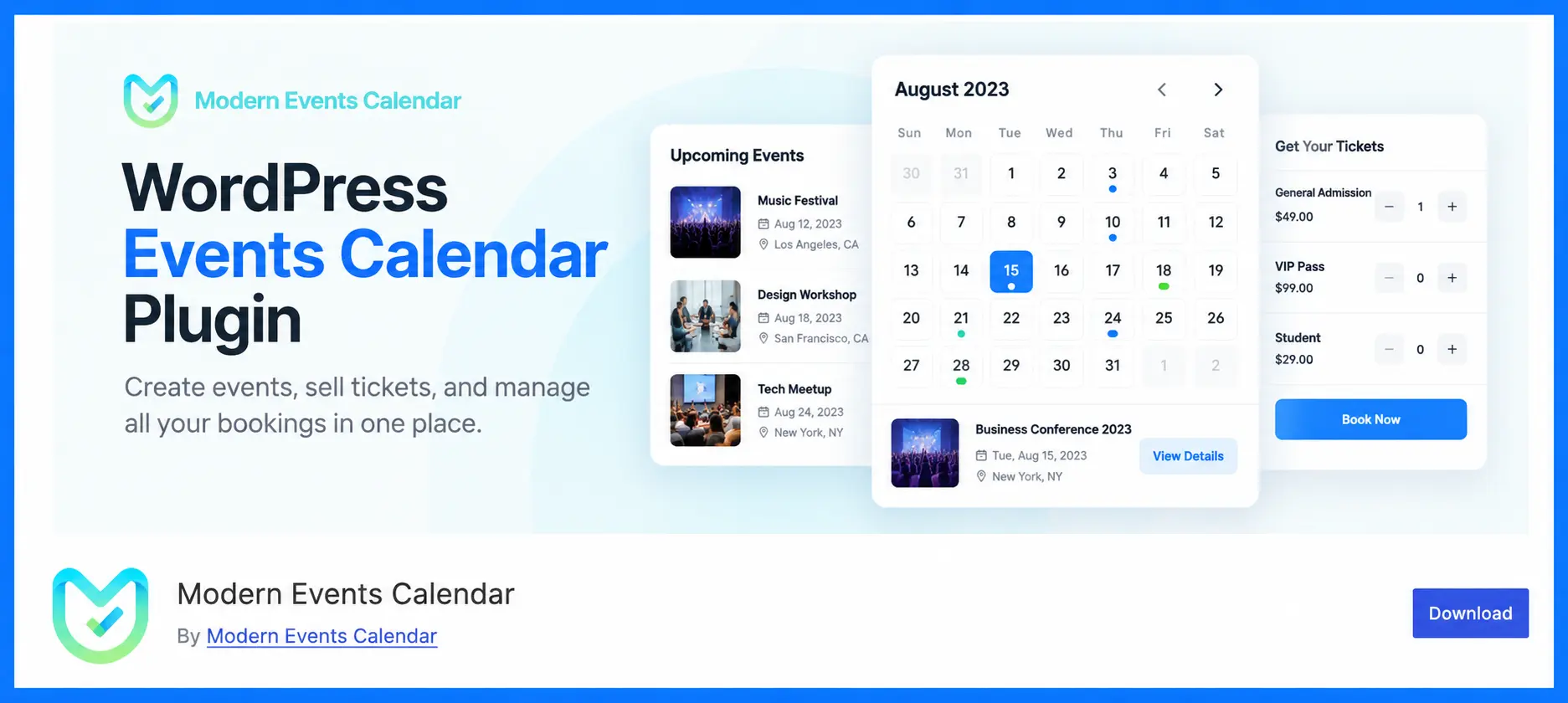
Modern Events Calendar (MEC) is all about how your events look. Webnus advertises 60+ display layouts, and it works with Elementor, Divi and WPBakery, so it’s a common pick for people looking for Divi events alternatives.
What stands out
- Monthly, weekly, daily and slider views in the free Lite version
- Imports from Google Calendar, Facebook and Meetup
- Migration from The Events Calendar, EventON, Events Manager and Eventbrite
Pros: the widest choice of layouts; one of the strongest sets of calendar integrations
Cons: booking and ticketing are Pro only; the free version is no longer on WordPress.org, so you download it from Webnus
Pricing: free Lite version; Pro from $99/year
Choose it if design and layouts matter most. Skip it if you want free ticketing.
Compare it in our Modern Events Calendar vs Eventin guide.
7. EventON: best for a visual event calendar

EventON is known for its colorful tile-style calendar. The free Lite version already covers a lot. Most people searching for EventON alternatives want ticketing without paying for several separate add-ons.
What stands out
- Repeating events (daily, weekly, monthly, yearly, custom) in Lite
- Virtual events and Google Maps
- Basic PayPal payments in Lite
Pros: attractive design; one-time price for the full version
Cons: ticketing gets expensive: the Tickets add-on is $120/year and needs WooCommerce
Pricing: free Lite version; full version $60 one-time (lifetime updates, 1 year of support)
Choose it if you want a striking public calendar. Skip it if ticket sales are your main goal.
8. WP Event Manager: best WordPress event listing plugin
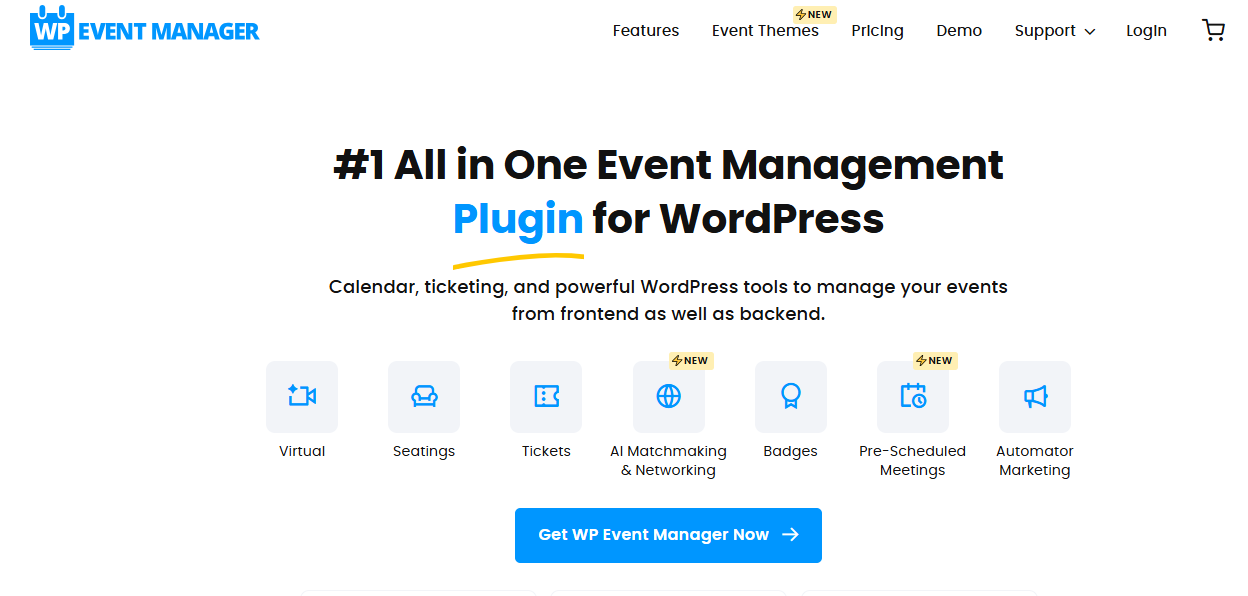
WP Event Manager works like a job board, but for events. Visitors can browse, search and submit their own events, which makes it a good fit for community calendars and event directories.
What stands out
- Front-end event submission and an organizer dashboard in the free version
- Search and filters by event type and category
- Commission-free ticket sales through WooCommerce (paid add-on)
Pros: strong for multi-organizer event listings; you only pay for the add-ons you need
Cons: recurring events, calendar views and ticketing are all paid; no refunds. Cost is the main reason people look for WP Event Manager alternatives.
Pricing: free version; add-ons from $49/year; bundles from $99/year
Choose it if you run an event directory. Skip it if you want calendar, recurring events and tickets in one install.
9. Event Organiser: best free calendar plugin for complex recurring events
Event Organiser handles repeat patterns other plugins can’t, like “the third Tuesday of every month,” and it does it for free.
What stands out
- Complex recurring schedules in the free version
- iCal import and export
- Venues with Google Maps or OpenStreetMap
Pros: free recurring events; low-cost Pro with bookings
Cons: updates have slowed (mostly security fixes since 2024); no block editor or page builder support
Pricing: free version; Pro from £50 (single site)
Choose it if you need tricky recurring schedules. Skip it if you want active development or Elementor support.
10. Simple Calendar: best Google Calendar plugin for WordPress
Simple Calendar doesn’t make you manage events inside WordPress. You keep using Google Calendar, and your website calendar shows the events.
What stands out
- Displays any public Google Calendar in grid or list view
- No double entry: edit in Google, and your site updates
- 50,000+ active installs
Pros: easiest option if your team already uses Google Calendar
Cons: you need to create your own Google API key; no registrations or tickets; lower rating (3.8/5)
Pricing: free version; paid plans from $99/year (private calendars and extra views)
Choose it if your events already live in Google Calendar. Skip it if you need sign-ups or payments.
FAQs
What is the best WordPress calendar plugin?
It depends on what you need. The Events Calendar is the best choice for a classic event calendar. Eventin is better if you also want registrations, ticket sales and check-in in one plugin. Events Manager is the best free option if you need bookings.
What is the best free WordPress calendar plugin with recurring events?
Events Manager, Event Organiser and Eventin all include recurring events in their free versions. Event Organiser handles the most complex patterns, like “the third Tuesday of every month.” The Events Calendar and Sugar Calendar only offer recurring events on paid plans.
What is the best Google Calendar plugin for WordPress?
If your events already live in Google Calendar, Simple Calendar shows them on your site, though you need to set up a Google API key. If you manage events in WordPress, Eventin syncs them with Google Calendar, iCal and Outlook in the free version.
Can I sell tickets with a WordPress event calendar plugin?
Yes. Eventin sells tickets through WooCommerce, Stripe or PayPal. Events Manager takes free bookings, with online payments in Pro. Sugar Calendar sells tickets through Stripe with a 3% fee. The Events Calendar uses the free Event Tickets plugin, which charges a 2% fee unless you upgrade to Pro.
Is The Events Calendar free?
Yes, the core plugin is free and includes month, list and day views. Recurring events, extra calendar views and Elementor widgets need a paid plan, starting at $259/year. These features used to be sold as Events Calendar Pro. Eventin and Events Manager offer recurring events for free.
Which event calendar plugin works best with Elementor?
Eventin includes 10+ Elementor widgets in its free version and lets you design event pages and tickets in Elementor. Sugar Calendar also has free Elementor widgets. The Events Calendar’s Elementor widgets need a paid plan
Which WordPress calendar plugin should you choose?
There’s no single best WordPress calendar plugin. The right one depends on what your events need:
- Calendar, registrations and ticket sales in one plugin: Eventin
- A classic public event calendar: The Events Calendar
- Free event registration with recurring events: Events Manager
- A simple, lightweight calendar: Sugar Calendar
- Appointments plus events: Amelia
- Showing an existing Google Calendar: Simple Calendar
Start with the free version of your top pick, add a test event, and check how it looks on your theme before you upgrade.
Run Your Events with Eventin
Create a responsive WordPress event calendar, take registrations, sell tickets, and check guests in from your own website.
Try Eventin FreeCalendar views, filters, registration, ticketing, and QR check-in in one plugin.