Google Won’t Index Your WordPress Pages Until You Fix These 5 Things


Table of Contents
If your WordPress pages aren’t showing up on Google, you’re not alone. Indexing problems are one of the most common issues site owners face, and they can lead to traffic loss, ranking delays, and confusion about what’s actually wrong.
The good news is that you can fix it. And you’re in the right place to get help.
This guide walks through the exact reasons WordPress pages fail to index, how to diagnose each one using Google Search Console, and the technical steps needed to get your pages indexed again.
The problem may look big, but the solution is often simple. Take a breath, stay calm, and let’s fix this together. But let’s identify the reasons behind the indexing issues.
Why your WordPress pages are not indexing
After you log in to Google Search Console, go to Pages under the Indexing section. This view shows all your indexed and non-indexed pages.
On the left, you’ll see the reasons why certain pages are not indexed. On the right, you’ll find more details that explain what Google found during the crawl.
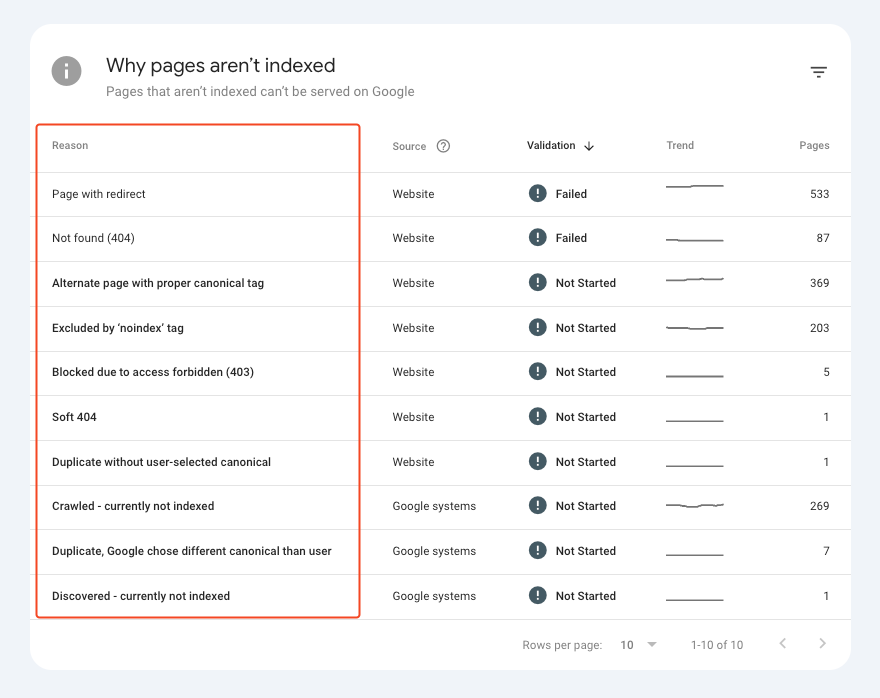
Now, let’s check the most common issues faced by users.
a. Most technical issues
- noindex meta tags: This tag tells Google not to index the page. If it’s added by mistake, Google will skip the page.
- robots.txt blocking: Your robots.txt file may block Googlebot from crawling specific URLs. If Google can’t crawl a page, it won’t index it.
- Wrong canonical URL: A wrong canonical tag tells Google that another page is the “main” version. Google may ignore your page and index the other one instead.
- HTTP errors: Errors like 404 or 500 stop Google from loading the page. If Google can’t load it, it cannot index it.
- Redirect loops: When a page redirects in a loop, Google gets stuck and gives up. As a result, the page stays unindexed.
b. Site-level issues
- Broken sitemap: If your sitemap is missing pages or not updating, Google may not discover new or essential URLs.
- Wrong domain settings after moving staging → live: When moving from the staging site to live, old URLs or staging settings may remain. This can confuse Google and block indexing.
- Plugin conflicts (SEO plugin, caching plugin, security plugin): Some plugins can override meta tags, block Googlebot, or serve old cached pages. These conflicts can stop Google from indexing your pages.
c. Content and structure issues
- Thin or duplicate content: If a page has very little text or repeats content from other pages, Google may decide it isn’t worth indexing.
- Orphan pages: These are pages with no internal links pointing to them. If Google can’t find a path to the page, it may skip indexing.
- Slow or unstable site causing crawl delays: If your site loads too slowly or has downtime, Googlebot may stop crawling. Pages that aren’t crawled often stay unindexed.
How to fix WordPress site not indexing issues in 5 easy steps
You are now aware of the types of problems and why they occur, right? It’s time to fix the WordPress page indexing issues one by one.
Some terms may sound technical, but we will be trying to keep them as simple as possible.
Let’s get started:
Step 1: Check Indexing Status With Google Search Console
After you notice indexing issues, open Google Search Console to confirm whether the page is indexed or not. This is the most accurate way to check.
You can also do a quick manual check on Google. Search using:
site:yourlink
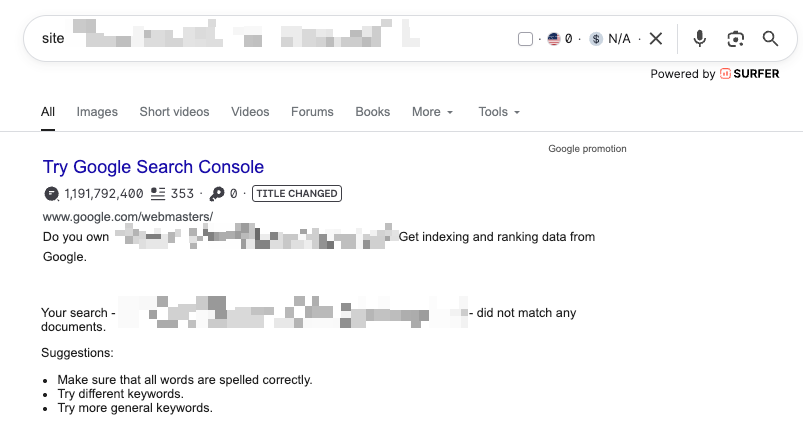
If the page doesn’t show up, it’s not indexed.
How to inspect a URL
In Google Search Console, enter the page link into the Inspect any URL bar at the top. Google will show you whether the page is indexed or not.
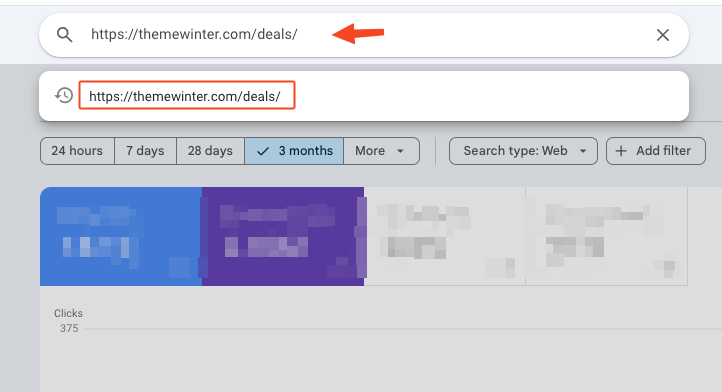
How to test a live URL for indexability:
After the first check, click Test Live URL. This tells Google to check the page in real time, not from its old cache.
The live test helps you see:
- If the page is reachable
- If Google can crawl it
- If the page is allowed to be indexed
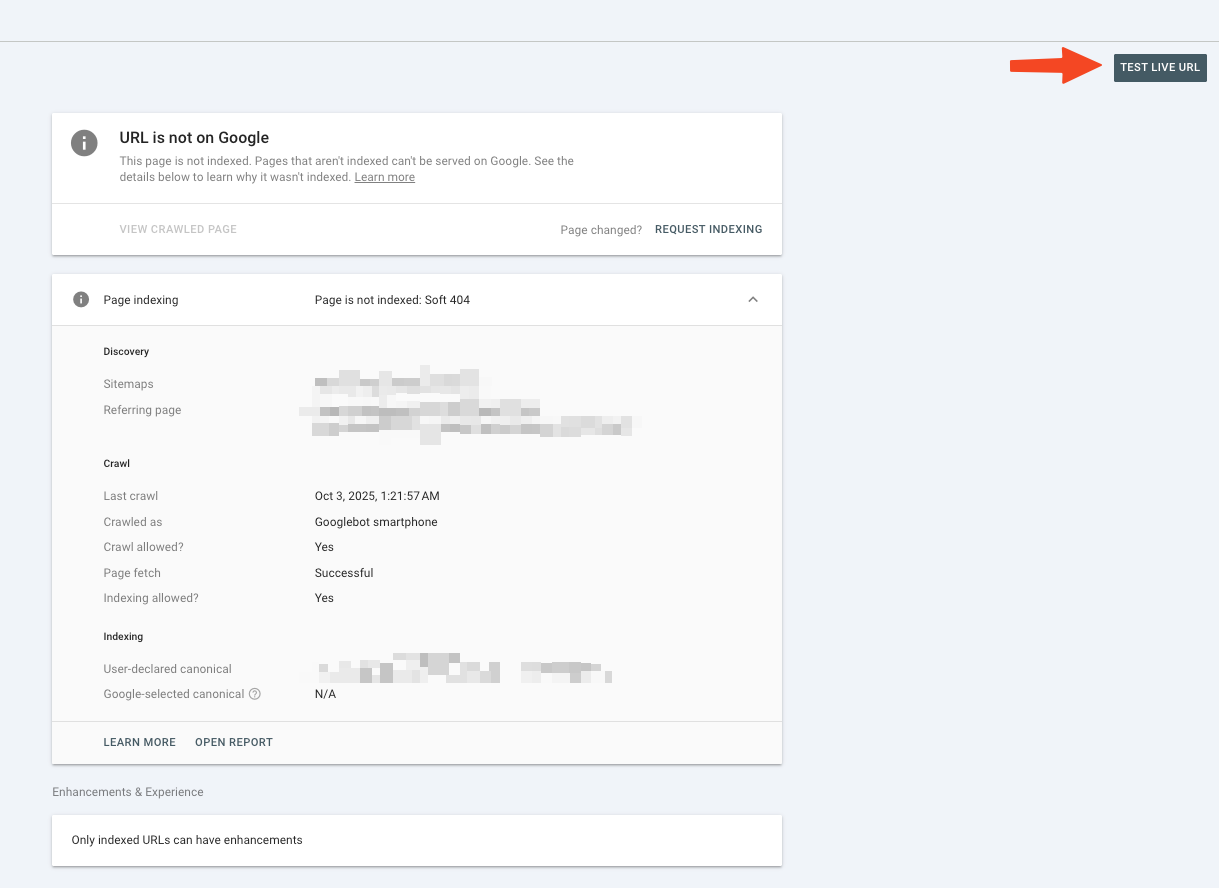
What to check inside the inspection report
Meta tags: Look for any noindex tag. If this tag exists, Google will never index the page.
Canonical issues: Make sure the canonical URL is set to the correct page. If it points to another URL, Google may index that page instead.
Crawl allowed/disallowed: Check the “Crawl allowed?” section. If it says No, your robots.txt or meta rules are blocking Googlebot.
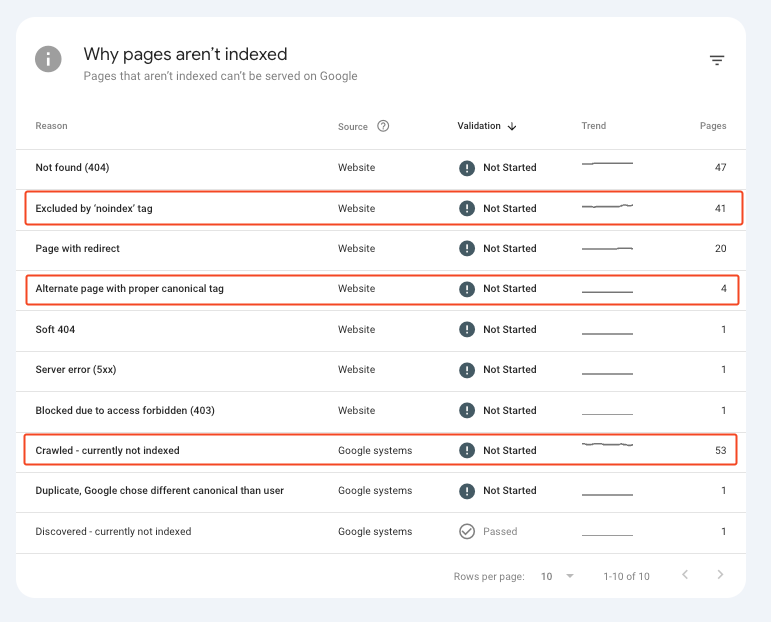
Step 2: Fix technical indexing blockers
Once you know what is stopping Google from indexing the page, you need to fix those issues and make the page indexable again. These are the first things to check, because even one wrong tag or rule can stop Google entirely.
Let’s go through the key items you should fix:
a. Check for noindex tags
A noindex tag tells Google not to index the page. If this is turned on anywhere, Google will skip the page completely.
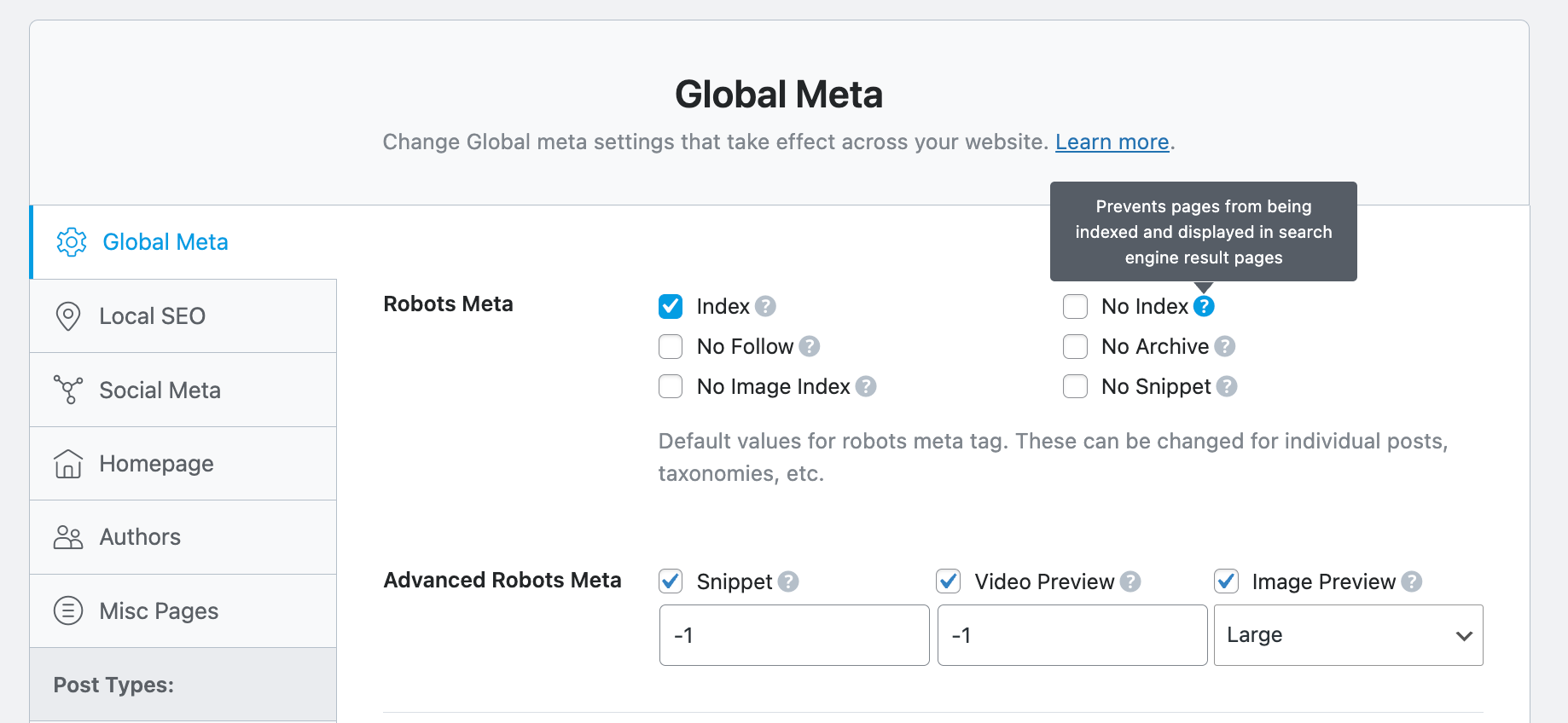
You can see how this looks inside the WordPress backend. This is the example from Rank Math, and here it’s a Global Meta or Search Appearance section where you can control whether pages and posts should be indexed.
- Make sure the Index option is checked.
- Make sure No Index is NOT checked.
- These settings apply site-wide. If “No Index” is enabled here, none of your key pages will be indexed.
You should also check the page-level settings for each post or page. Most SEO plugins let you toggle Index/Noindex directly inside the editor.
If you want to verify it manually, you can check the page source:
Right-click → View Page Source
Search for:
noindexIf you find this meta tag in the source, Google will not index the page. Fixing this tag is one of the simplest and most common solutions for indexing issues.
b. Fix robots.txt
Your robots.txt file tells Google which parts of your site it can or cannot crawl. If something important is blocked here, Google will never index those pages.
What must NOT be blocked?
Make sure your robots.txt does not block:
/wp-content/uploads/
/wp-content/themes/
/wp-content/plugins/
Your important pages or folders
Your sitemap URL
You should also make sure this line is not present for public sites:
Disallow: /Using this code means you are blocking the entire website.
How to check the live robots file
To see your active robots.txt file:
- Go to your browser
- Enter: yourdomain.com/robots.txt
This shows the exact rules Googlebot is reading. If you see anything that blocks key pages or folders, remove or adjust those lines.
After fixing robots.txt, test again in Google Search Console → Settings → and Robots.txt file under the crawl section.
You can also use this tool to validate your robots.txt file.

c. Fix wrong canonical URLs
A canonical URL tells Google which version of a page is the main one. If the canonical tag points to the wrong page, Google may ignore the page you want indexed.
How does staging URLs cause indexing loss? Well, after moving a site from staging → live, many websites forget to update their canonical tags.
Common issues include:
- Canonical is still pointing to the staging domain
- Canonical is pointing to a different page instead of the live version
- Duplicate pages all pointing to the same canonical, so Google only indexes one
If Google sees a canonical that points away from your live URL, it assumes:
“This page is not the primary version.”
As a result, the page may stay crawled but not indexed. You can fix canonicals in two ways:
1. Use your already installed SEO plugin
Most SEO plugins (AIOSEO, RankMath, Yoast) allow you to set or edit the canonical directly inside each page. Make sure the canonical is set to:
https://yourdomain.com/your-page/Not the staging URL and not another page unless intended.
2. Check the HTML source
If you want to verify manually:
- Right-click → View Page Source
- Search for:
rel="canonical"Confirm it matches the correct live URL. Once the canonical tag points to the right page, Google will know which version to index.
d. Check redirects and HTTP errors
Google can’t index a page if it runs into errors or gets stuck in redirect loops. These issues are easy to miss but have a big impact on crawlability.
404, 500, and 301 chains
Here’s what to look for:
- 404 errors → Page not found. Google can’t load it, so it won’t index it.
- 500 errors → Server problem. Google stops crawling when the server fails.
- 301 redirect chains → A page that redirects multiple times before reaching the final URL.
To Google, these signals say the page is unstable or hard to reach.
How do redirect chains block indexing? A redirect chain is when a URL jumps like this:
Page A → Page B → Page C → Final PageEvery extra step slows Googlebot down. If the chain is too long or loops back to another redirect, Google may stop crawling and skip indexing the page.
The goal is to keep it simple:
Page A → Final PageOnly one redirect at most. Fix this by updating internal links, correcting old redirect rules, and removing unnecessary steps.
Step 3: Fix XML sitemap issues
Your XML sitemap helps Google discover your pages. If the sitemap is wrong or outdated, Google may miss important URLs. Fixing it is an easy and effective step.
Ensure the sitemap exists. First, confirm that your sitemap is active. Most sites use a URL like:
yourdomain.com/sitemap.xmlIf it returns an error or a blank page, your sitemap isn’t working correctly. Ensure the correct domain is used (www vs non-www, http vs https)
Your sitemap must match your live domain. For example:
- Use https, not http
- Use either www or non-www, but stay consistent
If the sitemap points to an old version of your site, Google may ignore it.
Ensure the sitemap includes all key pages. Open the sitemap and check if your important pages are listed. If key pages are missing, Google may never crawl them.
Once you are done, submit or resubmit the sitemap in Google Search Console
In GSC:
- Go to Sitemaps
- Enter your sitemap URL
- Click Submit
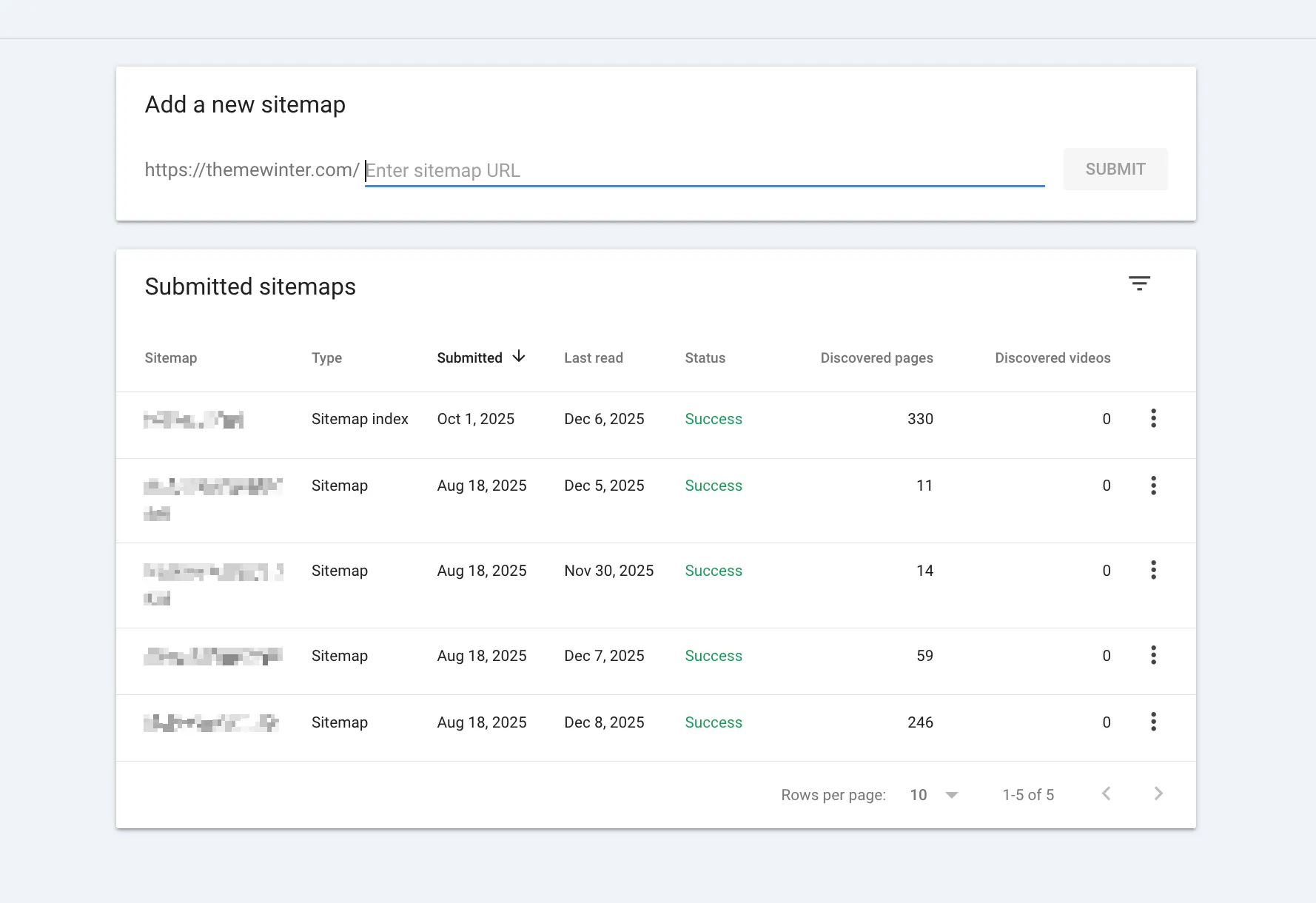
If the sitemap was already submitted, delete and re-add it. This pushes Google to recheck your URLs.
Step 4: Improve your content so Google wants to index it
Even if your page is technically fine, Google may still skip indexing if the content does not offer clear value. Google chooses which pages to index based on how useful, unique, and understandable they are. Improving your content helps Google see why the page matters.
a. Provide unique value
Google ignores thin or repeated content. If a page has very little text or looks similar to other pages on your site, Google may see no reason to index it. Add helpful details, examples, or explanations that make the page stand out.
b. Focus on the topic
Google needs to understand the main topic of the page. Use simple headings, short sections, and a clear structure. This helps Google see what search queries your page should appear for.
c. Internal linking
Google follows links to discover and evaluate content. Link to your page from other relevant pages on your site. This shows Google where the page fits and why it is crucial.
d. Remove orphan pages
An orphan page is a page with no internal links pointing to it. Google rarely indexes these because it struggles to find and understand them. Make sure every important page is linked from at least one other page, ideally more.
Improving these areas signals to Google that the page is helpful and deserves to be indexed.
Step 5: Fix indexing issues after migration or staging push
Indexing problems often appear right after moving a site from staging → live. This is one of the most overlooked causes of pages not indexing.
Even small migration mistakes can block Google without you noticing. Let’s fix the most common issues that happen during or after a site move.
a. Unwanted noindex flags
Staging sites often use noindex. When copied to live, this flag may stay active in:
- WordPress “Discourage search engines” setting
- SEO plugin global settings
- Page-level settings
Remove any noindex rules so Google can index the live site.
b. Canonical tags pointing to staging
After migration, some pages may still have canonicals that reference the staging domain.
If your canonical points to:
staging.yoursite.comGoogle will ignore the live page. Update the canonical so it points to the correct live URL.
c. Mixed-content redirects
Switching domains or http → https can create redirect loops or mixed-content errors. These slow down Googlebot and may block crawling. Fix all mixed-content warnings and ensure every page loads over HTTPS without extra redirects.
d. Search-and-replace old URLs
Update all references to the staging domain in the database. Tools like Better Search Replace or WP-CLI help replace old URLs with the live domain. This fixes broken links, old metadata, and wrong canonicals.
e. Clear all cache
After changes, clear:
- WordPress cache
- CDN cache
- Host cache
Cached files can still show old redirects or noindex tags. Once cleared, test the URL again in Google Search Console.
Additional concerns to get the most out of the success
Once you have completed the main steps, you need to be concerned about some factors. So you can stay away from the common WordPress errors.
Let’s check out below:
1. JavaScript rendering problems
Many page builders rely heavily on JS.
If Google cannot render:
- headings
- content blocks
- images
- tabbed sections
- accordions
- dynamic content
…then Google sees an empty or partial page. Therefore, use the URL Inspection Rendered HTML view to see what Googlebot actually sees.
2. Crawl budget limitations
Large WordPress sites often struggle with crawl budget. Signals you have crawl budget issues:
- Many “Discovered – currently not indexed” URLs
- Thousands of low-value pages
- Slow server response times
Fix by:
- removing thin pages
- improving internal linking
- consolidating duplicates
- tightening sitemap scope
3. Security plugins blocking Googlebot
Firewall and bot-protection plugins may mistakenly block Googlebot.
Check:
- User-agent restrictions
- Rate limiting
- Bot-block rules
Confirm Googlebot access via server logs.
4. Check plugins and theme conflicts
Plugins and themes can override each other’s settings without you noticing. This causes indexing problems even when everything looks correct on the surface.
a. How SEO plugins may override each other
If you have more than one SEO plugin active, they may generate conflicting meta tags.
Keep only one SEO plugin active.
b. How caching plugins may serve old meta tags
Caching tools store outdated versions of pages. They may keep serving an old noindex tag or a wrong canonical even after you fix it. Clear all cache after updating metadata.
c. How security plugins may block Googlebot access
Some security plugins block unknown bots, and Googlebot can get caught in that filter.
Check firewall rules and bot-block settings.
d. How theme templates can inject wrong canonical tags
Some themes add their own canonical tags. If they conflict with your SEO plugin, Google may index the wrong URL. Turn off theme-generated canonicals if your SEO plugin already handles it.
5. Make Google re-crawl the page
Once all issues are fixed, you need Google to review the page again.
a. When to use “Request Indexing.”
Use it only when:
- The page is fully indexable
- Noindex is removed
- Canonical is correct
- Page loads without errors
b. How long does re-indexing take
Re-indexing can take anywhere from a few hours to a few days. For new pages or low-authority sites, it may take longer.
c. Why repeated requests get ignored
Requesting indexing many times does not speed things up. Google may slow down crawling if it sees spammy or repeated requests. Submit once, then wait.
6. Track recovery
Indexing recovery takes time, so monitor it in a structured way.
a. Use GSC → Pages report → Indexing filters
Check which URLs moved from “Not indexed” to “Indexed.” Use filters to see the exact reasons for remaining issues.
b. Watch changes weekly (not daily)
Google updates slowly. Daily checks won’t show real progress and may confuse. Weekly reviews are more accurate.
c. How to export problem URLs and fix them in batches
In GSC, you can export non-indexed URLs. Group them by issue type (noindex, canonical, redirect, thin content). Fix similar problems together to save time.
Checklist: A quick fix flow for fast debugging
Getting indexed is easier when everything works together
Fixing WordPress indexing issues isn’t about a single setting or plugin switch.
It’s a combination of:
- technical access
- accurate canonicals
- crawlable structure
- valuable content
- stable performance
Once your site is technically sound and your content communicates clear value, Google will index your pages consistently and predictably.
Keep checking Google Search Console after major updates, plugin changes, theme switches, or site migrations. Small changes can unintentionally reintroduce old indexing issues.
With a clear process and consistent monitoring, your WordPress pages will stay visible and indexable and your organic traffic will grow steadily.
Need help fixing indexing or other WordPress technical issues?
Sometimes the problem is simple. Sometimes it’s not. Indexing issues can come from hidden tags, old staging settings, plugin conflicts, theme overrides, or server rules that are hard to spot on your own.
If you want someone to check everything for you and fix it the right way, you can get support from our team. We help with WordPress technical issues, performance problems, SEO errors, and site audits.